How to Recruit B2B SaaS Affiliates Without Collecting 400 Coupon Sites
I once managed a client program with nearly 4,000 registered partners. On paper, that number looked like scale. In practice, most of those partners were inactive, irrelevant, or impossible to meaningfully work with.
We audited the program and cut the list down to just under 300. Activation improved because the remaining partners were actually targetable, relevant, and capable of driving pipeline. The program got smaller and more effective at the same time. I break down that cleanup in the full affiliate program audit case study.
That experience shaped how I think about recruitment. The partners you let in determine the quality of the program you will be managing later. A loose filter creates a bigger database. A deliberate recruitment process gives you people you can actually activate, support, and grow.
Recruitment is one part of the wider system. I cover how it connects to commissions, onboarding, activation, partner management and reporting in my B2B SaaS affiliate program management guide.
The partners you let in set the ceiling on what your program can do.
Why B2B SaaS Recruitment Needs a Different Filter
A lot of generic affiliate recruitment advice assumes a high-volume consumer model: open the application form, join a network, approve broadly, and let volume sort itself out.
B2B SaaS usually works differently. Buyers spend more time evaluating, comparing, asking peers, reading reviews, and getting recommendations from people they already trust. That means the partners who create value are often consultants, agencies, educators, newsletter writers, creators, integration partners, and customers with a relevant audience.
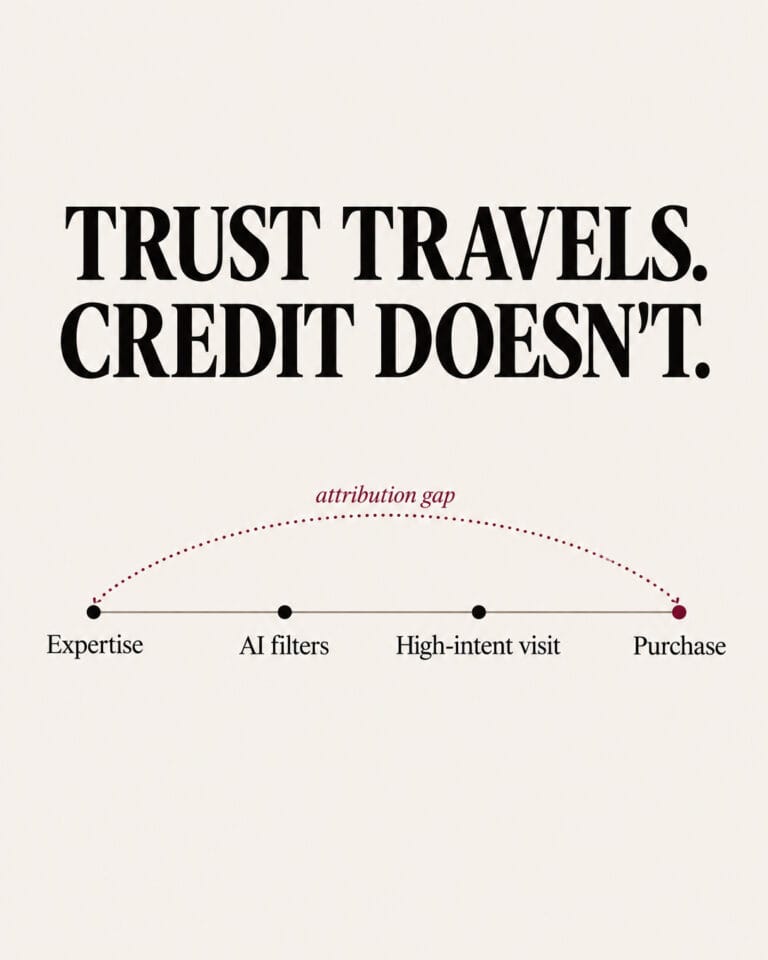
Bottom-of-funnel partner models such as coupon, cashback, and toolbar traffic are not automatically useless. But they deserve scrutiny. In many B2B SaaS programs, their value is limited if they mainly appear at the final step and claim credit for demand that already existed. The question is not “does this partner generate conversions?” It is “what value did this partner add to the conversion?”
That distinction matters because recruitment should build the kind of partner base your program actually wants, rather than accepting everyone and trying to untangle incrementality later.
What a Strong B2B SaaS Affiliate Looks Like
The strongest B2B SaaS affiliates usually share one thing: they already have trust with a specific audience that overlaps with your ideal customer.
That can show up in different ways:
- Niche newsletter writers and creators. Their audience may be small compared with a general media site, but the relevance is much higher.
- Consultants and agencies. Software recommendations are already part of the work they do with clients, which can make the affiliate relationship a natural extension of an existing behavior.
- Integration and tech-stack partners. Their users already operate in an adjacent workflow, so the audience overlap can be strong.
- Review and comparison publishers. The useful ones genuinely help buyers evaluate options instead of simply capturing coupon-intent traffic.
- Existing customers. They already understand the product and may have credibility with exactly the people you want to reach.
Audience fit matters more than raw audience size. A smaller creator whose readers are exactly your ICP can be far more valuable than a huge site sending mixed-intent traffic.
Source Proactively Instead of Waiting for Whoever Finds You
If your entire recruitment strategy is “wait for applications,” you get whoever happens to find the signup page. That can work, but it gives you very little control over who enters the pipeline.
Proactive sourcing gives you more control over partner quality than relying on inbound applications alone.
Start with your customers
Look for customers who already advocate for the product, publish useful content, teach your category, run communities, consult, or have an audience that overlaps with your ICP. They do not need to call themselves affiliates already. In many cases, the best partner relationship starts with someone who was recommending the product before there was any commission attached.
Mine your integration ecosystem
Your integrations page, app marketplace, Zapier or Make connections, and complementary tools can all surface companies and people serving the same buyers from a different angle. Start with the mutual audience and the co-promotion opportunity before jumping straight into an affiliate pitch.
Find the people already writing about your category
Search the newsletters, YouTube channels, podcasts, LinkedIn feeds, communities, and search results your buyers actually use. Look for people covering the problem your product solves, not just people with “affiliate marketer” in their bio.
Comparison content is especially useful for discovery. Someone already publishing “best X tools,” migration guides, category explainers, or detailed product reviews is showing you both the audience and the promotional format they know how to use.
Study who already promotes adjacent products
Affiliate disclosures, comparison articles, recommended-tool pages, and newsletter sponsorships can show you who already works with products in your category. That does not mean you should copy a competitor’s partner list blindly. It means you have evidence that the person understands this kind of promotion and may be worth evaluating for fit.
Build an Application Form That Gives You Something to Evaluate
A form that asks for a name, email, and website is a contact form. It tells you almost nothing about whether the person belongs in the program.
I want enough information to understand the audience, the promotional method, and the actual plan. Questions like these do more work:
- How do you plan to promote this product?
- Who is your audience?
- What is your primary content or acquisition channel?
- Link to a recent piece of content, client resource, or channel that shows how you communicate with that audience.
Open-text answers give you more information to evaluate than a dropdown, especially when you ask for concrete examples or links. They are not impossible to game, obviously. The internet has given everyone access to extremely competent-sounding paragraphs. The point is to create enough evidence that you can verify the person behind the application rather than approving a polished sentence at face value.
Vet for Fit, Not Just for the Absence of Red Flags
Even a good application form does not replace review. Before approving someone, I want to understand five things:
- Does the audience match? Are they talking to, serving, or influencing people who could realistically buy the product?
- Is there evidence of real activity? Is the site, channel, newsletter, community, or consulting business current and active?
- Would you trust the content? Is there original thinking, useful information, and an identifiable person or business behind it?
- How do they acquire attention? Search, email, social, YouTube, communities, paid traffic, direct client recommendations, and other channels can all be legitimate. What matters is whether the method fits your economics and program terms.
- How do they promote software? Past SaaS promotion can help, but lack of it is not automatically a reason to reject a strong-fit partner.
There are also signals worth reviewing more closely: thin templated pages, vague answers about traffic, a site dominated by promo-code pages, no obvious audience, aggressive brand-bidding behavior, or promotional methods the applicant cannot explain clearly.
Those are reasons to investigate, not a universal automatic-rejection checklist. Context matters. The job is to decide whether the partner can create useful demand or influence for your specific product without creating attribution or compliance problems you do not want.
Write Outreach That Gives Them a Reason to Reply
Once you find strong candidates, the next problem is contacting them without sounding like every automated partnership email they already deleted that morning.
Leading with the commission rate usually makes the relationship feel transactional before you have established relevance. “I came across your content and thought you would be a great fit” says almost nothing. Three paragraphs about your company make the recipient do work before they even know why you are in their inbox.
Good first-touch outreach is short and specific:
- Start with a real observation. Reference something they created, said, taught, or recommended. Not a compliment that could have been sent to 500 people.
- Make the connection. Explain what the product does and why it is relevant to the audience or work you just referenced.
- Use a low-friction ask. Something like “Worth sending the details?” is easier to answer than a calendar link and a request for 30 minutes.
The first message does not need to close the partnership. It needs to earn the next interaction.
Follow up when the fit is strong and you have something useful to add. One thoughtful follow-up is better than mechanically running every prospect through the same sequence because a sales-engagement tool says Email 4 is where the magic happens.
Make Recruitment an Operating Habit, Not a Rescue Project
Recruitment often gets treated as a launch activity. The program opens, everyone sources aggressively for a few weeks, then recruitment disappears until someone notices the pipeline has gone quiet.
Build it into the regular operating rhythm instead. How much time that takes depends on the maturity of the program, but sourcing, application review, follow-up, and pipeline tracking should not only happen when growth has already stalled.
Track enough to learn where good partners come from: who you contacted, where you found them, what type of partner they are, whether they replied, whether they joined, and eventually whether they activated. If consultants sourced through LinkedIn consistently become productive while a particular marketplace generates mostly low-fit applications, that should change where you spend the next month.
Recruitment is not finished when someone joins. The handoff into onboarding and activation tells you whether your recruitment assumptions were right.
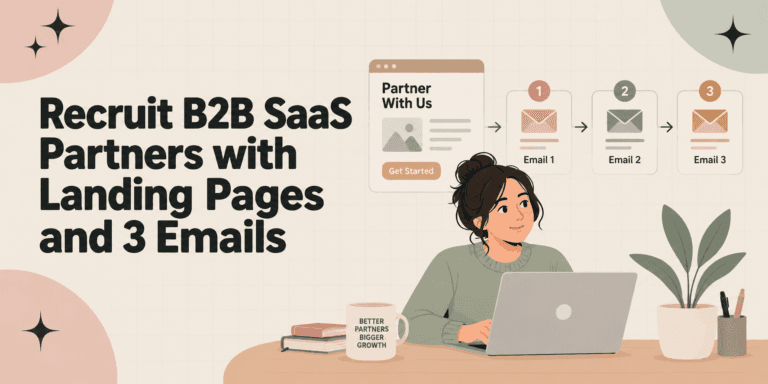
The Recruitment Sequence I’d Use
- Define what a strong partner looks like for your specific product and ICP.
- Source proactively from customers, adjacent ecosystems, creators, consultants, agencies, and relevant publishers.
- Build an application form that gives you enough evidence to evaluate fit.
- Vet every application against the same core questions, while leaving room for context.
- Reach out to high-potential candidates with messages specific to them.
- Track where productive partners actually come from and adjust your sourcing accordingly.
That is the version of affiliate recruitment that builds a program worth managing instead of one you need to clean up six months later.
If you are already sitting on a large, messy partner base, start with an affiliate program audit before adding more people. And for the broader system around economics, onboarding, management, measurement, and reactivation, see my Complete Operator’s Guide to B2B SaaS affiliate program management.