Your Affiliate Program Isn’t Built to Sell
I keep auditing affiliate programs and partner hubs that look polished on the surface, then stall the moment a real partner tries to use them. The problem shows up often enough that I can usually name it before I open the resource folder.
These programs are built for the end user. The person whose job is to recommend the product gets an afterthought.
That design choice explains a lot of stalled growth. The partners who joined cannot find a fast path to a paid conversion, so they sit idle. When a resource hub reads like an onboarding academy, the company has built a library for customers while the promoters wait for ammunition that never arrives.
Across SaaS affiliate programs, only 1.28% of affiliates generate at least one sale. That gap should get the attention of anyone running a program. Registration clearly does not translate automatically into revenue, and enablement is one of the places worth investigating.
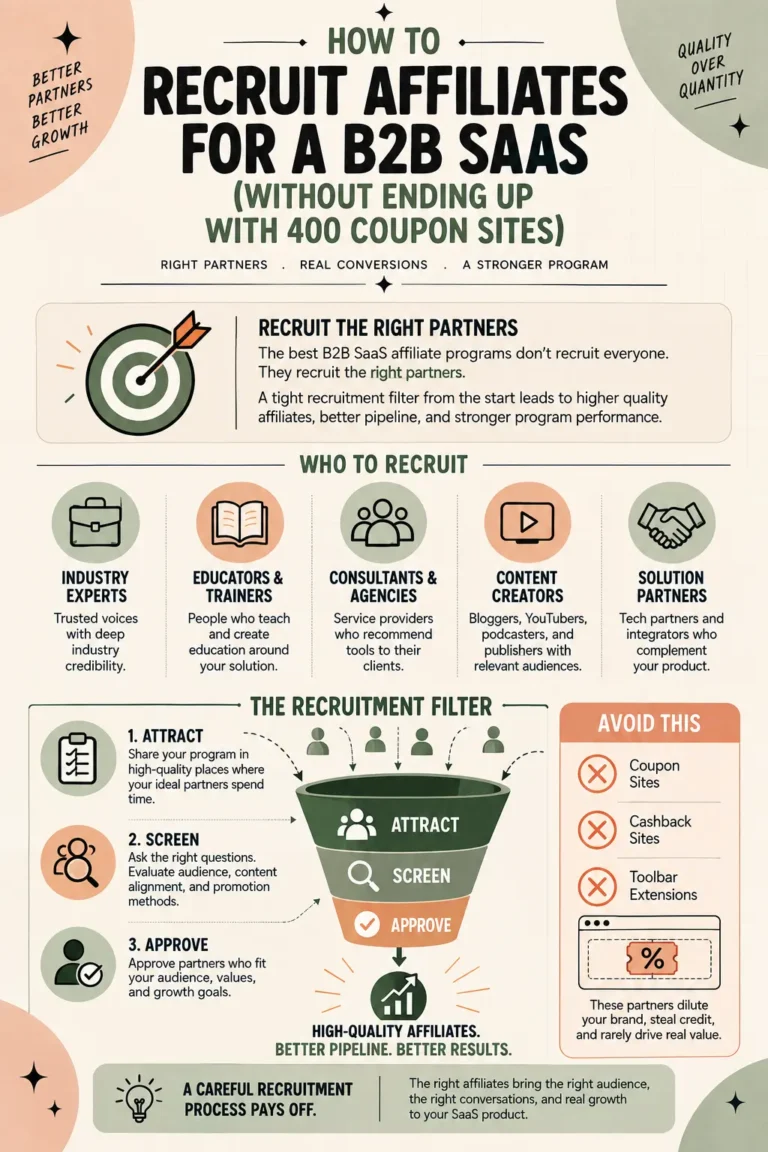
Recruitment keeps getting blamed for this. In my experience, enablement deserves the scrutiny first.
Enablement is one part of the larger operating system. I map the full thing, from economics and recruitment through activation, reporting and reactivation, in my B2B SaaS affiliate program management guide.
The “Free Is How You Grow” Problem
A free plan or trial can be exactly the right entry point. The problem starts when the entire partner story ends there.
If your affiliate materials teach only “try it free,” a partner can generate signups and still have no clear route to a commission. They need to understand where the paid value begins: what limitation the paid plan removes, what use case makes the upgrade worthwhile, what time or cost it saves, and when paying becomes the sensible decision.
Free can be the entry point. It cannot be the entire sales story.
If you want affiliates to behave like revenue partners, give them a credible path from interest to paid value rather than a freebie funnel and a vague hope that monetization happens later.
What the Resource Hubs Get Wrong
The setup I keep finding in audits looks like this: resources that teach the tool instead of teaching how to sell the tool.
Templates and subject lines exist, written as product education. Competitor comparisons sit buried three clicks deep or stay missing entirely. There is no clear explanation of why someone pays, who converts best, or what angle a partner should lead with.
So affiliates respond the way any rational person would. They do nothing, or they improvise, which adds friction and breaks consistency across the whole program.
Education has its place. Affiliates want friction removed more than they want another lesson.
Recruitment quality matters too. But even a well-matched, motivated partner can stall if the resources do not help them translate interest into a credible promotion. That is why I treat enablement as part of affiliate activation, not as a folder of nice-to-have assets.
Affiliates want ammunition more than information.
The 48-Hour Test
Run this test on your own program. A brand-new partner should be able to join, skim your resources, pick a paid-oriented angle, and put together a credible promotion within 48 hours.
If they cannot, your program serves internal comfort instead of growth.
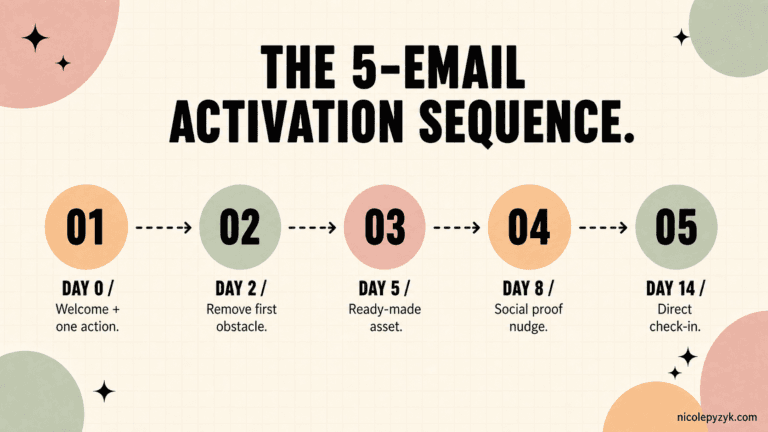
Programs that make partners complete a course, request assets by email, and reverse-engineer positioning from a product page push the first promotion out unnecessarily. Every extra step is another place for motivation to disappear. Your onboarding sequence should reduce that friction, not add to it.
What Your Program Should Hand Partners on Day One
1. Proven promotional angles
Feature lists do not sell. Angles tied to pain and outcomes do: ROI, urgency where it is real, replacements (“use this instead of X”), migrations (“switch from X to stop hitting limits”), or a specific workflow the product makes easier. A handful of strong angles beats a long list of vague ones.
2. Paste-ready copy
LinkedIn posts, newsletter blurbs, short-form video hooks and scripts. Copy a partner can ship today, without reverse-engineering a product page at midnight and wondering why they signed up.
3. “Why someone buys this,” in plain language
Who converts best. The before and after. What to say when someone asks “why pay?” The simplest call-to-action path. This sounds obvious, and it is surprisingly often missing from anything a partner can actually access.
4. Comparisons as a centerpiece
If your competitors have brand recognition, your partners need a clean, honest way to answer “why this over the alternative?” Buyers already run that comparison on their own. Hiding your comparison pages just removes you from a conversation that happens anyway.
5. Persona-led kits
Your partner base contains distinct groups. Creators want hooks, scripts, and quick-start assets. Agencies and consultants want ROI framing, case studies, migration plays, and material they can use in client conversations. One generic library rarely serves both equally well.
“Cool” Isn’t a Reason to Buy
Plenty of partner hubs position the product as interesting or educational. Interest can keep someone reading. It is not, by itself, a reason to pay.
People buy when relevance, trust, ROI, switching pain, a clear use case, or genuine urgency gives them a reason. Your partners need language that makes that value concrete without inventing pressure that is not there.
Useful angles sound more like this:
- “If your team is still doing X manually, this is where the paid plan starts making economic sense.”
- “The free plan works until you need X. At that point, the paid plan removes Y limitation.”
- “If switching from X removes this bottleneck, here is what changes operationally.”
You do not need hype. You need a reason the paid plan makes sense for the right buyer.
The Fix: One Page That Earns Its Place
If you build one thing, build what I call a Sell It In 10 Minutes page. A single, focused resource that gives a brand-new partner everything they need to promote your product today.
It should include:
- 2 to 3 best-buyer profiles: who actually converts and why
- 3 to 5 proven angles, one sentence each
- Why the paid plan is worth it, in bullet points tied to real outcomes and limits
- Competitor comparisons that are honest and easy to use
- 5 to 10 swipe examples: posts, scripts, and calls to action
- The exact link and call to action you want partners to use
That page moves a partner from “let me learn this product” to “I can promote this today.”
One compliance note: affiliates should follow applicable disclosure requirements when promoting products. The FTC’s Endorsement Guides cover disclosures for endorsements and affiliate relationships.
Measure Activation Like It Matters
If you track signups alone, you optimize for the wrong outcome.
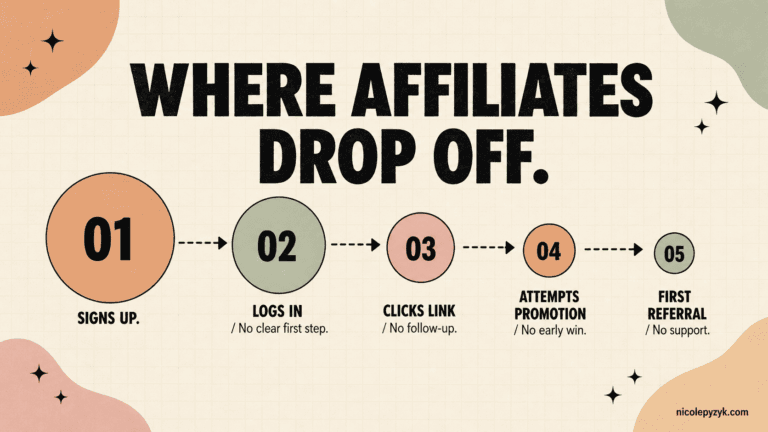
Track the percentage of new partners who reach the meaningful stages in your program: first promotion, first click or referral, first signup, and first paid conversion. Then track the time between those stages. The right window depends on how your product is bought, but the trend tells you whether your enablement is reducing friction or simply creating more registered partners who never progress.
Segment those numbers by partner type where you can. A consultant, a newsletter publisher, and a content creator may have very different paths to a first meaningful result, and averaging them together can hide where the real problem sits.
If you keep recruiting affiliates and none of them activate, recruitment probably is not your real problem. That is usually the point where I would audit the program before adding another batch.
The Bottom Line
The programs I audit are often built to look helpful while leaving partners without a fast route to income. When your resources say “before you promote this, go consume hours of training,” you are telling affiliates to delay revenue. Many will simply move on.
Stop building academies. Start building enablement.
For the broader system around recruitment, economics, activation, measurement, and ongoing management, see my Complete Operator’s Guide to B2B SaaS affiliate program management.