Why Cutting 90% of Our Affiliate Program Made It More Effective
Four thousand registered partners sounds like a healthy affiliate program. On the client dashboard I was looking at, it was the headline number, the one that showed up in reports and made the channel look like a real distribution network.
It meant almost nothing.
When I ran a full audit on the program, the activation picture told a different story. The overwhelming majority of those partners had never promoted the product, never sent a referral, and never opened a program email. The instinct in that situation is to recruit more partners and hope the next batch performs. We went the other direction. We cut the list down to under 300 partners, and the program measurably improved.
This is what that process looked like, and why it worked.
The Number That Looked Like Success
A large partner count feels like progress. Founders like it. It reads well in a board deck. What it actually tells you is how many people clicked a sign-up link at some point. It says nothing about whether any of them intend to promote the product.
The industry data backs this up. In B2B SaaS, only 7.6% of affiliates make at least one referral, and just 1.28% generate at least one sale. Fewer than two in a hundred registered affiliates ever produce revenue. A dashboard showing 4,000 partners can still sit on top of a program where only a tiny fraction ever produces revenue.
Day to day, a list that size is mostly noise. This one was a mix of bloggers, SaaS reviewers, random sign-ups, competitors who joined to look around, and a small core of people who genuinely cared about the product. Segmentation was nearly impossible because nobody knew who most of these partners were. Outreach had to stay generic because the audience was too diffuse for anything else. The partners who were genuinely interested received the same mass email as everyone else, which is a poor first impression.
The program had too many of the wrong partners, and nobody had ever made a deliberate decision about who should be there.
What Triggered the Audit
The signal was simple. Activation stayed flat while sign-ups kept climbing. More partners joined through the self-sign-up flow every month, and the percentage generating referrals refused to move. Recruiting more partners into a broken activation process makes the problem bigger, since every new unvetted sign-up adds management cost without adding revenue.
That made the diagnosis clear. The top of the funnel was fine. Everything after sign-up was the issue, along with the fact that most people in the program had no business being there in the first place. An audit was the only way to get an honest picture of what we were working with.
How the Audit Actually Worked
The process was straightforward. The decisions were uncomfortable. Cutting partners from a program goes against every growth instinct, and you have to accept that the list gets smaller before it gets better.
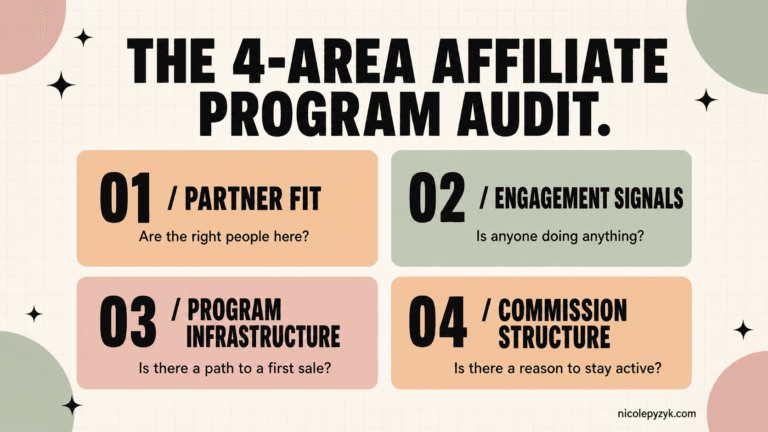
Here are the four steps we followed:
- Pull the full partner list. Every registered partner, regardless of status, with whatever data the platform held: join date, last login, clicks, referrals, commissions earned.
- Segment by activity. Active partners had referred at least one customer in the last 90 days. Dormant partners had historical activity and nothing recent. Never-active partners joined and did nothing.
- Evaluate relevance. For anyone with activity or promise, we assessed real fit: audience alignment, content type, promotional method.
- Decide per segment. A deliberate call for each group rather than one blanket rule.
The Criteria That Determined Who Stayed
A partner stayed if they met two conditions. Their audience had to include the kind of person who would actually buy the product. And there had to be evidence, or a reasonable expectation, that they could promote it meaningfully.
Relevant meant directly relevant. Adjacency failed the test. Being vaguely in the same industry failed the test.
Evidence of promotion meant clicks, referrals, content mentioning the product, or a response to outreach showing real intent. Silence counted as an answer.
One distinction mattered a lot here. Dormancy alone was never grounds for removal. Relevant but dormant partners received one re-engagement attempt before any decision: a direct ask with a specific campaign, what we needed from them, and a clear yes-or-no request. Irrelevant partners came off the list regardless of activity level, because a high-volume partner sending the wrong audience drains margin while inflating the dashboard.
For partners who didn’t make the cut, we handled it cleanly. A short, direct email explaining the restructuring beats silence, and it keeps the relationship intact. We archived the full record instead of deleting it. If the business changes direction or launches a new product, that list has value.
What Happened After the Cut
After the audit, the program had just under 300 partners. Every one of them had been evaluated. Every one of them was there for a reason.
Activation improved significantly. The remaining partners were targetable, so campaigns could be specific, outreach could be personal, and follow-up became manageable.
When you write to 4,000 people, you write for no one in particular. When you write to 300 people you’ve vetted, you write for them specifically.
That difference shows up in engagement and then in activation.
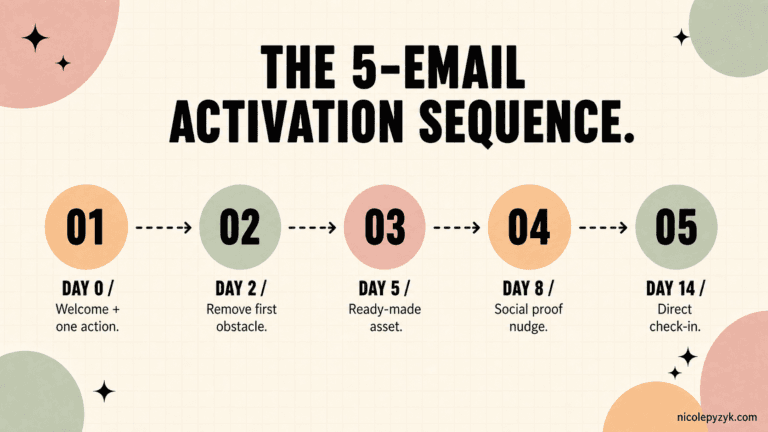
Benchmarks compiled across SaaS and digital-product programs point the same way. The median 30-day activation rate, measured as affiliates driving at least one paid conversion, sits at just 18%, while top-quartile programs reach 31% through welcome sequences, ready-made assets, and first-week check-ins. That kind of hands-on onboarding is only possible with a list you can actually manage. Following up with 4,000 partners is a full-time job with no end. Following up with 300 is a campaign you can run this quarter.
Activation also requires a relationship, or at least the credible start of one. A partner who feels like one of thousands on a mass list has no reason to prioritize your program. A partner who receives outreach clearly written for someone like them, with relevant resources, a specific ask, and a real name on the email, responds differently.
The Recruitment Trap
When activation is low, the default response in affiliate programs is to recruit more partners. More partners feels like more chances that someone promotes. In my experience, that diagnosis is usually wrong. The existing list was never properly activated, and adding unvetted partners to a broken process gives you more people to leave inactive.
Recruitment keeps winning this argument internally because signing a new partner is a visible win, while activating an existing one is slow and unglamorous, even though activation is where the revenue comes from. Partner fit drives outcomes far more than raw sign-up volume. The audit made that visible. The goal was a roster we could actually understand, segment and activate.
The cut forced the right question: before adding anyone new, do we understand why the people already in the program aren’t promoting.
What This Means for Your Program
SaaS programs are especially exposed to this problem because self-sign-up flows scale indiscriminately. Anyone can join, and over time you end up with exactly what this client had: a large-looking list, a flat activation rate, and a program manager too busy managing noise to build relationships with the partners who matter.
If your B2B SaaS affiliate activation rate is stuck, start with the list. Check it before the commission structure, before the creative assets, before the tracking setup. Pull every partner, segment by behavior, test for genuine relevance, and make a deliberate decision for each group.
Cutting this client’s list by 90% revealed what the program actually was and gave us something we could work with. A smaller base of vetted, relevant, active partners will usually outperform a large unvetted list, because you can finally speak to real people instead of broadcasting into silence.
If you looked at your own partner list while reading this and recognized the problem, run the audit. The uncomfortable part is deciding to shrink the number. Everything after that gets easier.