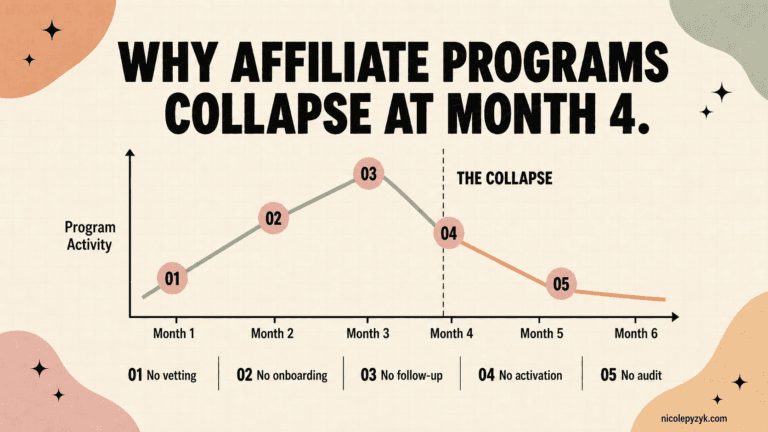
Affiliate programs look passive. The premise is seductive: build the program, hand affiliates a link, and let commissions roll in while you focus elsewhere. It is a lie that kills most B2B SaaS affiliate programs in their first year.
The reality is that affiliate programs require more active management than almost any other marketing channel, not less. They are, at their core, a people business dressed up as a software problem. And in B2B SaaS, where sales cycles run 90 to 180 days, buying committees involve six to ten stakeholders, and a single affiliate relationship with a well-positioned consultant can drive more revenue than a hundred anonymous link placements, that people problem requires a specialist to solve.
I know this because I spent six years being that specialist. At MailerLite, I inherited an affiliate program that had been built and then largely ignored across three products. By the end of my first year managing it properly, revenue had grown 25% and conversions had doubled. By 2024, the program was generating over $4.2M annually, with 28% fewer active partners than the year before. If you understand how affiliate programs work, that last part tells you more about what actually matters than the revenue number does.
I have no platform to sell and no agency commissions riding on my recommendations. This guide is everything I wish had existed when I started: a practitioner’s reference for building, running, and fixing affiliate programs that actually work in B2B SaaS.
It is for SaaS founders who want to launch a program the right way, growth leads who inherited a program they didn’t build, and first-time affiliate managers trying to understand what this job actually requires.
- Section 1: How B2B SaaS Affiliate Programs Are Different
- Section 2: What Commission Structures Actually Work for B2B SaaS
- Section 3: Recruiting Affiliates for B2B SaaS
- Section 4: Onboarding Affiliates – The Activation Problem
- Section 5: Managing Active Affiliates
- Section 6: Measuring Affiliate Program Performance
- Section 7: Why Affiliate Programs Fail And How to Fix Them
- Section 8: Reactivating Dormant Affiliates
- Section 9: Affiliate Platforms for B2B SaaS – What to Know Before You Choose
- Section 10: Should You Hire an Affiliate Program Manager?
- Frequently Asked Questions
- About the Author

Section 1: How B2B SaaS Affiliate Programs Are Different
Every piece of generic affiliate marketing advice assumes you are selling something a person can decide to buy in a single session. Your customer is not that person.
B2B SaaS buyers research for months, involve committees, and rarely convert on first contact. The affiliate practices designed for e-commerce, where Amazon’s 24-hour cookie is a baseline standard, are structurally incompatible with B2B sales cycles. Applying them to a SaaS affiliate program is not a small mistake. It is a foundational one that will make the program fail regardless of who you recruit or what you pay. From my experience, most affiliate programs aren’t built to sell.
Here is how the two models differ in practice.
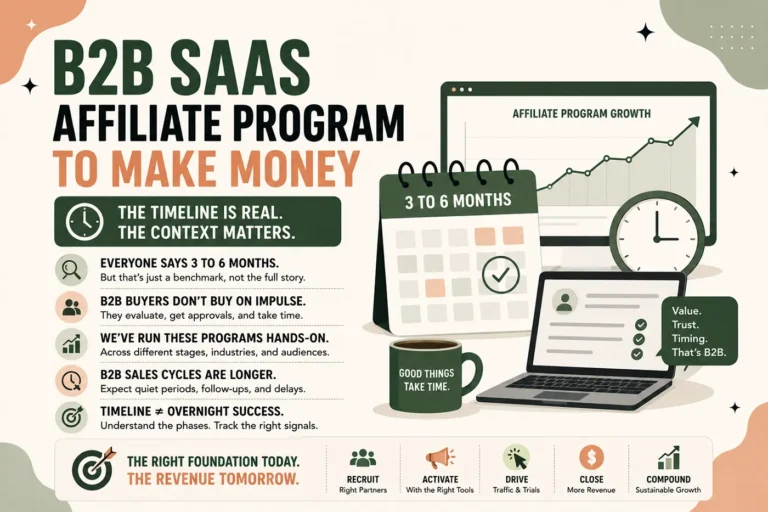
Sales cycle and attribution. The average B2B purchase involves six to ten stakeholders and can take 3 to 18 months from first touch to closed deal (Gartner, 2024). A 30-day cookie window, the e-commerce standard, gives an affiliate credit for exactly zero of the sales that take 31 days or longer to close. In B2B SaaS, 60 days is the minimum viable attribution window; 90 days is standard for mid-market; enterprise programs routinely require 120 to 180 days. Every day your attribution window is shorter than your average sales cycle, you are undercounting your affiliates’ contribution.
Commission structure. E-commerce affiliates earn a one-time percentage of a single sale. In SaaS, the economics run on subscriptions, which means the most motivating commission is recurring, paid every month the customer stays. A consultant who refers a $300/month customer and earns $60/month for 12 months will promote your product far more aggressively than one who earns a flat $100 bounty once. Recurring commissions align affiliate incentives with your retention economics in a way one-time bounties never can.
The affiliate persona. E-commerce affiliate programs are populated by coupon sites, cashback apps, and lifestyle influencers who drive impulse purchases through discount codes. None of those affiliate types work in B2B SaaS. B2B purchases go through procurement, legal review, and multi-stakeholder approval over months. A coupon code has no role in that process.
The affiliates who perform in B2B SaaS look completely different: consultants who embed your tool into client recommendations, newsletter authors whose professional audiences trust their software picks, agency owners who bundle your product into their service delivery, and content creators who write comparison articles that intercept buyers in the research phase. These people are more like partners than traditional affiliates, and the way you recruit, onboard, and manage them has to reflect that difference.
The channel’s strategic weight. According to the PartnerStack and Wynter State of Partnerships in GTM 2026 report, 35% of new pipeline at mid-market and enterprise SaaS companies is partner-influenced, 30% of SaaS companies call partnerships a top strategic priority for 2026, and 74% say partners are essential to customer satisfaction and retention, not just new acquisition. An affiliate program is not just a traffic source. For most B2B SaaS companies, it is a revenue infrastructure question.

Section 2: What Commission Structures Actually Work for B2B SaaS
“What commission rate should I offer?” is the question every founder asks first and the question that matters least in isolation. The structure, recurring vs. one-time, fixed vs. tiered, with or without clawbacks, determines whether your affiliates will stay engaged for years or disappear after a month.
Benchmark rates by ACV tier
Based on platform data from Rewardful (analyzing $68.4 million in affiliate-generated SaaS revenue) and commission structures across the top performers on the PartnerStack marketplace, the following ranges represent where mature programs land:
- Low-ACV SaaS (under $100/month): 20 to 30% of the first payment, or a flat $20 to $50 bounty. Recurring commissions work here only if your churn in months 1 through 3 is low. Otherwise you will be paying commissions on customers who refund before they deliver any LTV.
- Mid-market SaaS ($100 to $500/month): 20 to 30% recurring for 12 months, or a one-time 1x MRR equivalent. This is where recurring commissions have the most motivational pull. Affiliates can see a meaningful recurring income stream from a single referral relationship.
- High-ACV SaaS ($500-plus/month): Flat bounties of $200 to $1,000 are more common than recurring because long sales cycles make the timing of attribution difficult, and the per-customer value is high enough that a flat bounty is motivating on its own. Rewardful’s data shows B2B and enterprise programs average $16,500 in revenue per conversion. At that level, a $1,000 bounty is reasonable.
For reference, here is what named B2B SaaS companies currently pay their affiliates: HubSpot pays 30% recurring for 12 months with a 180-day cookie; Notion pays 50% recurring for 12 months on Plus and Business plans via PartnerStack; SEMrush pays 40% recurring with no stated cap on a 120-day cookie through Impact.com; ActiveCampaign uses a three-tier structure from 20% to 30% recurring; and Pipedrive pays 20 to 30% recurring over 12 months depending on partner tier.
The most common rates across the PartnerStack marketplace are 20%, 25%, and 30%. The average rate selected by SaaS affiliate program managers is 24.16% (Wecantrack). If you are trying to be competitive without benchmarking your exact vertical, 20 to 25% recurring is where you should start.

The Commission Model Decision Matrix
Before you choose a structure, answer these four questions. The answers will tell you which model fits your program.
- How long is your average sales cycle? If your median time from first touch to paid is over 60 days, a recurring commission model is essential. Your affiliates will not see any money from a one-time bounty program until months after they started promoting. That delay kills motivation.
- Is your product sticky or transactional? Sticky products (low churn, annual contracts, workflow-critical) justify recurring commissions because you will keep paying affiliates on customers who stay. High-churn products should use bounties paid after a 60 to 90 day hold period, to avoid paying commissions on customers who cancel in month two.
- Can you afford to pay on subscriptions that cancel within 60 days? If not, add a clawback clause. The industry norm is a 90-day clawback window: if a customer cancels within 90 days, the commission is reversed. A pro-rated alternative works well for annual contracts. If a customer completes 6 of 12 months, the affiliate forfeits only the remaining 6 months of recurring commission, not the entire year.
- Who are your affiliates, promoters or closers? Content creators and newsletter authors are promoters: they drive awareness and early-stage consideration. Consultants and agencies are closers: they have trusted relationships that drive the final decision. Recurring commissions work better for promoters, who need a long-term income reason to keep mentioning your product. Bounties can work well for closers if they are large enough to reflect the relationship investment.
Attribution windows
The most important configuration decision after commission rate is your attribution window. One SaaS company that increased its window from 30 to 45 days, after analyzing that its own average time-to-purchase was 38 days, reported a 22% jump in affiliate-driven revenue the following quarter. The explanation is simple: they were assigning credit for conversions that had been happening without it.
For B2B SaaS, use 90 days as your default. Go to 60 days only if your sales cycle is demonstrably short. Go to 120 to 180 days for enterprise-tier deals.
Tiered commissions as a retention tool
Programs with three or more commission tiers have a 55% average active affiliate rate, compared to 35% for programs with no tier structure, a 57% relative improvement (Modash, 2026). The reason is behavioral: visible progress toward the next tier creates goal-completion motivation that flat structures do not.
A practical tier structure: 20% base for all affiliates, rising to 25% once a partner generates $2,000/month in commissions, and 30% for partners at $10,000/month. HubSpot runs a similar model, adding milestone bonuses and dedicated account managers at their top two tiers. The structure self-segments your affiliate list. Your highest earners identify themselves.
Section 3: Recruiting Affiliates for B2B SaaS
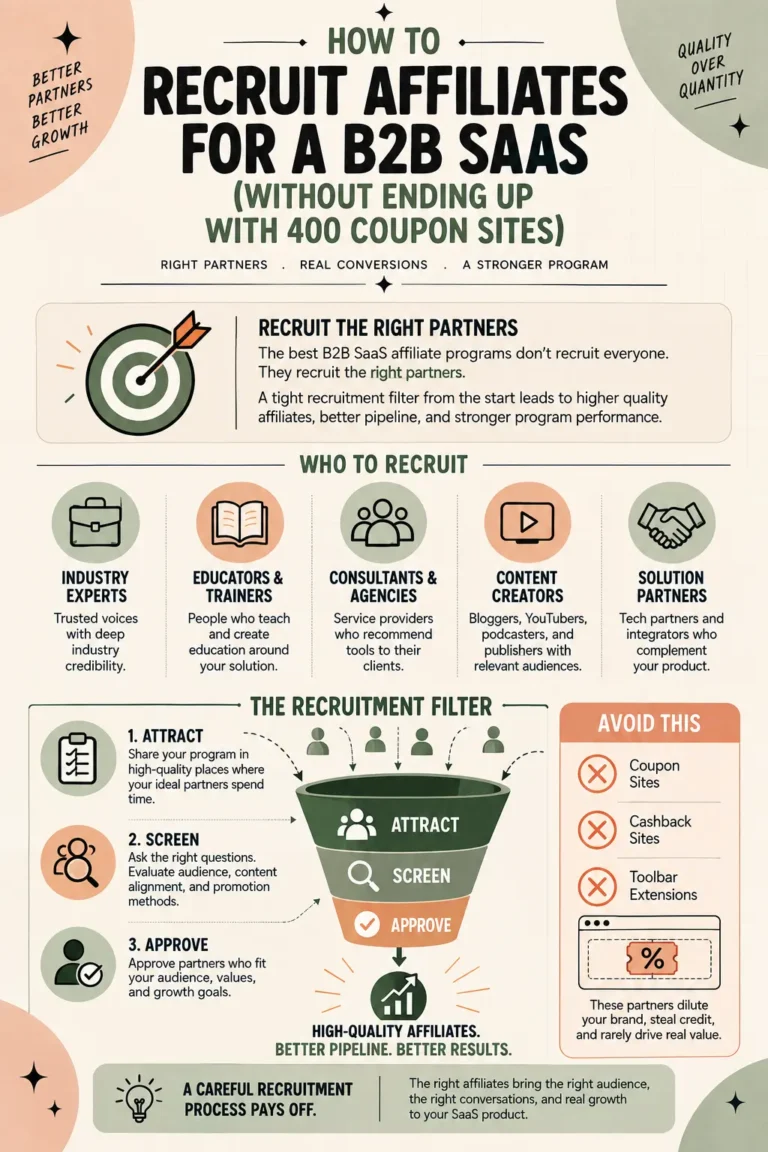
Most B2B SaaS affiliate recruitment goes wrong at the starting premise. Founders post to affiliate networks, accept anyone who applies, and build a ghost army of thousands of inactive affiliates who never promote a single time. The fix is not recruiting more people. It is recruiting fewer, better-fit people, and being deliberate about who qualifies.
The five affiliate types that perform in B2B SaaS
- Niche content creators. YouTubers, newsletter authors, and bloggers who write comparison content, software tutorials, and category reviews in your vertical. They intercept buyers who are actively researching solutions and already considering a purchase. Their attribution contribution is high-incrementality. They introduce buyers who were not yet in your funnel.
- Consultants and freelancers. Independent consultants, fractional executives, and freelancers who use your tool with clients. They recommend software as part of paid professional advice, which means their referrals convert at unusually high rates. A single consultant managing 20 client accounts is worth more than 200 bloggers with unfocused audiences.
- Complementary SaaS companies. Companies whose product integrates with or completes yours. They already have an audience of your exact buyers, and a referral from a trusted vendor carries outsized credibility.
- Community managers and course creators. People who teach your market. A course creator who teaches your software to their students as part of their curriculum generates ongoing referrals without ongoing outreach from you.
- Former customers and power users. Your own users who already love the product and have credibility with peers in your market. This is consistently the highest-converting affiliate type and the most consistently overlooked recruiting source.
Why e-commerce affiliates almost never work
Coupon sites, cashback apps, and mass traffic networks are optimized for impulse purchasing, not multi-month B2B research cycles. More specifically, they tend to capture demand rather than create it. A B2B buyer who has already decided to buy searches for a discount code at checkout, a coupon affiliate claims last-click credit, and you pay a commission on a sale that would have happened anyway. The incrementality is near zero, and because B2B purchases go through procurement and legal approval over months, a coupon code has no meaningful role in moving the decision.
The screen-out criteria for applications: if a prospective affiliate’s primary traffic source is a coupon directory, cashback platform, or high-volume low-engagement content site, decline the application. You are not losing revenue by doing so.
The Affiliate Recruitment Scorecard
Before accepting any affiliate application, and before approaching any prospective affiliate for recruitment, score them on the following four dimensions, each rated 0 to 3:
Audience relevance (0 to 3): Does their audience match your ICP? A score of 3 means their readers or followers are your exact buyers. A score of 0 means there is no evident overlap.
Promotion depth (0 to 3): Do they write or speak at length about software, or do they drop links without context? Content-forward affiliates who write substantive reviews and comparisons outperform link-droppers by a significant margin. A score of 3 means long-form, detailed, product-specific content. A score of 0 means no content track record.
Existing trust (0 to 3): Do their readers actually act on their recommendations? Proxy signals: comment engagement, response rates to their newsletters, purchase-triggering reviews. A score of 3 means demonstrated evidence that their audience buys what they recommend.
Activation likelihood (0 to 3): Do they seem motivated to promote actively? Have they reached out proactively, asked thoughtful questions about the program, or already created content about your category? A score of 3 means strong signals of readiness. A score of 0 means no indication they will do anything once they have the link.
Scoring: 9 to 12, priority partner. Invest in the relationship immediately. 6 to 8, worth onboarding with a standard sequence. Below 6, high probability of going dormant. Pass unless there is a specific strategic reason to include them.

Where to actually find affiliate candidates
Your own customer list. The single best source. The people who already pay you, understand your product, and have credibility in the market are ideal affiliate candidates. Segment your customer list by engagement, identify power users and advocates, and reach out personally. Most programs never do this.
G2 and Capterra reviewers. Anyone who has written a detailed public review of your product has already done the work of articulating your value proposition. They are warm candidates.
Content search. Google your category keywords and note who is already writing comparison articles and reviews. They are already in the market, already have an audience, and are already writing about your space.
Affiliate marketplaces. PartnerStack’s network has 115,000-plus active B2B-focused partners; Impact.com’s partner database exceeds seven million; Reditus has 25,000 affiliates specifically from B2B SaaS. Marketplaces accelerate discovery, but the best partners still require personal outreach, not just a marketplace listing.
Outreach that converts
Generic affiliate outreach does not work. “We have a great affiliate program with competitive commissions” earns the delete key. What earns a reply is specificity.
Lead with a reference to something specific they have created: “I read your piece on [topic]. Your audience is exactly who benefits from [product].” One sentence describing why the fit is right. One sentence on what they would earn. One clear ask: not “check out our program,” but “would you be open to a 15-minute call?”
I’ve tested hundreds of personalized outreach emails and found that specific content references pulled three times the reply rate of vague compliments. The average cold email reply rate across industries is 3.43%. Personalized affiliate outreach with specific content references can reach 5 to 6 percent or higher.
The sequence structure that works: three to five emails over two to three weeks, not a single blast. The first email is the specific, personal pitch. The second is a brief follow-up with a different angle. The third is a short, easy close. Stop after three if there is no response.
Section 4: Onboarding Affiliates – The Activation Problem
Here is the number that defines the affiliate management problem in B2B SaaS: only 7.6% of affiliates ever generate a single referral. That is Rewardful’s figure from platform data across programs generating $68.4 million in affiliate revenue over 12 months. The other 92.4% join, receive a login link, and never promote anything.
The cause is not that affiliates are lazy. In almost every case, it is that the onboarding experience gave them no reason and no clear path to take their first action.
At MailerLite, I doubled signup-to-sale conversion by doing three things: restructuring the onboarding sequence, segmenting affiliates by type instead of treating them as one audience, and redesigning the offer for each segment. None of it was complicated. All of it required someone to actually own it.
The 30-day activation window
Affiliates who generate their first click within 14 days of joining have an 80% higher chance of becoming long-term active affiliates. Affiliates who generate no traffic within 30 days have only a 15% chance of ever becoming active (Growann). The first two weeks are the single largest variable in whether your program produces active partners or a ghost army.
Everything in your affiliate onboarding email sequence is designed to get one action from each partner within the first 14 days. Not five actions – one.
What most affiliate onboarding gets wrong
Most programs send a welcome email with a login link and a list of resources. Then nothing. The affiliate logs in once, finds a dashboard full of unfamiliar metrics and banners they do not know how to use, and closes the tab. Three weeks later they have forgotten they signed up.
Three structural failures explain most of it.
No single clear next step. Programs give affiliates a portal with ten options and no priority ordering. The result is paralysis. One clear action, “here is your link; here is one thing you can do with it in the next 24 hours,” outperforms a comprehensive resource library every time.
Assets that do not match the affiliate’s audience. Most marketing teams build assets for direct traffic, buyers who already know the company. Affiliate audiences are different: they are hearing about the product for the first time from someone they trust. That requires different copy, different framing, and a different call to action. Generic banners do not do that work.
No human follow-up. An affiliate who has never heard from a person at your company after the automated welcome email is not in a relationship. They are in a database. A single personal check-in, “have you had a chance to share the link with anyone yet?”, is the difference between a 5% activation rate and a 30% one.
The Affiliate Onboarding Sequence
Five touchpoints, over the first 14 days, built around one goal: one promotion action before day 14.

Touchpoint 1 – Day 0: Welcome plus one clear first action. Put the tracking link at the top, large, copy-pasteable. State one specific thing they can do in the next 24 hours. Not five options – one. Everything else is secondary.
Touchpoint 2 – Day 2 to 3: Resources plus one specific promotion angle. Deliver swipe copy, email templates, and social captions here, not in the welcome email where they compete for attention. Write one promotion angle for their specific audience type. Include concrete commission math: “the average affiliate earns $X per referred customer at our standard plan.”
Touchpoint 3 – Day 5 to 7: Personal check-in. Write this as if a person sent it. “Hey, just making sure everything came through okay – any questions about the program or how the tracking works?” Include a two-paragraph copy-paste promo they can send immediately with zero editing. The easier you make the first action, the more likely it happens.
Touchpoint 4 – Day 10 to 14: Low-effort catch. Short, a single link or asset. Surface early results from other affiliates if available. This catches affiliates who were interested but not yet active before they cross into dormancy.
Touchpoint 5 – Day 21 to 28: If no activity, direct personal outreach. Not an automated email – an actual personal message. Reference their specific situation. Include a concrete hook: a new product feature, a limited bonus commission window, an asset built for their audience. This is the difference between an affiliate who goes dormant at day 30 and one who activates at day 25.
What belongs in an affiliate welcome kit
Every affiliate should receive, at or before their first login:
- Their tracking link, prominent and easy to copy
- Commission structure in plain language (not a rate table – a sentence: “You earn 25% of every customer’s monthly payment for 12 months”)
- Payment schedule and method
- A two-paragraph product description written for their audience, not yours
- Swipe copy: at minimum, two email templates, five social captions, and three subject line options
- Three specific promotion angles with example copy for each
- The name and direct contact of a human at your company, not a support email address
B2B SaaS programs should add: an ROI or value calculator their audience can use, two to three case studies, and a product changelog notification process so affiliates stay current with what they are promoting.
The most common reason affiliates give for not promoting when directly asked: they cannot find their links and swipe copy. Build the welcome kit around that single fact.
Programs with structured onboarding processes experience 50% greater new affiliate retention than programs without one.
Section 5: Managing Active Affiliates
Affiliate management is not a software problem. It is an account management problem that happens to run through software. The programs that sustain strong performance year after year are the ones where a person, not a platform, is actively maintaining relationships, reviewing data, producing assets, and enforcing compliance.
If no one at your company has spoken to an affiliate in the past 30 days, that is not a gap in your tool stack. It is a gap in your operations.
The minimum viable affiliate management stack
Three things before anything else.
A tracking platform that is not a spreadsheet. Manual tracking breaks at 20 affiliates and becomes unusable at 50. Choose a platform appropriate for your stage (see Section 9), and make sure your links, conversions, and payouts are reconciling automatically.
A monthly affiliate communication cadence. At minimum, a monthly newsletter to all active affiliates. Top-tier partners should hear from you individually at least quarterly.
A performance dashboard you actually review. Weekly at minimum for click-to-conversion rates by affiliate. Monthly for payouts and top and bottom performer identification. Quarterly for program-level ROI and commission structure review. If no one is looking at the data, no one will catch the problems – and there will always be problems.
The 20-60-20 time allocation
Not all affiliates deserve the same management attention.

Your top 20%, the partners who drive most of your revenue, deserve 50 to 60% of your management hours. That means weekly or biweekly proactive outreach, a dedicated contact point, early access to new features and promotions, co-marketing opportunities, and individually negotiated commission structures. These relationships are the program. Treat them accordingly.
The middle 60%, affiliates with some activity, get a monthly newsletter, access to new assets, and reactive support when they reach out. Most of this tier is served through automation. Your goal is to make it easy for them to move up.
The bottom 20%, affiliates with zero revenue in 90 days, get an automated inactivity sequence and then a removal decision. Carrying large numbers of permanently dormant affiliates distorts every performance metric you track. A program with 150 genuinely active affiliates is healthier and easier to manage than one with 500 names in a database who have never promoted anything.
Affiliate communication that keeps partners engaged
The monthly newsletter is your minimum viable communication channel. Half of all affiliate programs have no newsletter or broadcast mechanism at all, which means their affiliates have no particular reason to remember them (Modash, 2026).
A newsletter that affiliates actually read contains six things: upcoming promotion dates with specific deadlines, new or updated creative assets, program-wide performance highlights, one immediately actionable tip, product or program updates that affect how they should talk about you, and a brief human note that reads like it came from a person. Keep it to 300 to 500 words. No affiliate opens a 1,200-word digest.
Open rate is your first signal that the newsletter is working. Across the programs I have managed, a well-run affiliate newsletter consistently hits 40 to 60% open rates, well above standard marketing email benchmarks, because affiliates have a direct financial reason to pay attention to what you are sending. If yours is below 20%, the content is either too infrequent, too generic, or both.
For your top-tier partners, individual quarterly check-ins are the minimum. These do not need to be long, 20 minutes to ask what is working, share what other affiliates are finding effective, and discuss what is coming next. The affiliates who feel like partners rather than link distributors promote proactively instead of reactively. That difference shows up in your revenue numbers.
When an affiliate has gone quiet, the formula is simple: be specific, be human, make it easy to respond. A message that opens with “I noticed you haven’t had any recent clicks – wanted to check in personally” outperforms any automated “we miss you” sequence. One actionable hook, a new use case, a limited bonus window, a co-marketing idea, gives them a reason to respond.
Going silent on partners is the fastest way to lose them. I have seen programs with strong commission structures and genuinely good products fall apart because the manager went quiet for a quarter and never came back. Partners notice. They will not wait.
Managing compliance without killing relationships
The FTC’s revised Endorsement Guides, which took effect in June 2023, are the framework every affiliate you work with must comply with. The core requirement: disclosures must be clear and conspicuous, meaning they stand out, are easy to notice, and are easy to understand. A disclosure buried at the bottom of an article or hidden in a bio does not meet the standard.
What the FTC actually requires: disclosure of the material connection before or immediately adjacent to the affiliate link. For video, both on-screen text and audible disclosure, simultaneously. The phrase “affiliate link” may not be sufficient because many consumers do not know what it means. “I earn a commission if you buy through this link” is the clearer alternative. Penalties run up to $53,088 per violation, and both the brand and the affiliate can be held liable.
For B2B affiliate programs, the practical compliance checklist: include disclosure requirements in your affiliate agreement; audit a sample of affiliate posts quarterly; have a documented escalation process for violations (warning, commission hold, termination); and use a monitoring tool like BrandVerity (starting at $799/month) or Bluepear (starting at $525/month) if your program is large enough to make manual monitoring impractical.
The most common compliance problems in B2B SaaS programs are not disclosure failures. They are coupon code abuse and brand keyword bidding. Coupon abuse happens when an affiliate distributes your promo code beyond their own audience. Brand bidding happens when an affiliate runs paid search ads on your brand name to intercept buyers already searching for you, then claims commission on the redirected traffic.
Detect coupon abuse by searching your promo codes on major coupon sites regularly. Detect brand bidding by searching your brand name plus common modifiers (“[brand] coupon,” “[brand] promo”) while monitoring your paid search impression share. Both represent commission payments on sales that would have happened without the affiliate’s involvement.
Section 6: Measuring Affiliate Program Performance
Most affiliate programs measure the metrics that are easiest to see: total affiliates, total clicks, gross revenue attributed to the affiliate channel. None of those numbers tell you whether your program is healthy. Some of them actively mislead you.
The metrics that matter
Revenue per active affiliate (not revenue per affiliate). The denominator matters enormously. If your program has 500 enrolled affiliates but only 50 have ever generated a conversion, your “revenue per affiliate” figure makes the program look ten times worse than it is, and hides the fact that your active affiliates may be performing quite well. Always use active affiliates as the denominator. Active, in B2B SaaS, means at least one confirmed conversion in the past 90 days (or 180 days for enterprise programs with longer sales cycles).
Affiliate activation rate. The percentage of enrolled affiliates who have driven at least one conversion. The industry baseline, from Rewardful’s platform data: 7.6% of all enrolled affiliates ever generate a single referral. If your activation rate is below 10%, the program has a structural onboarding problem. High-performing programs reach 45 to 55% activation. Programs with structured onboarding sequences see 25 to 35% of new affiliates make at least one sale within 30 days.
Affiliate-referred customer churn rate, compared to baseline. This is the most underused metric in SaaS affiliate management. If your affiliate-referred customers churn faster than your overall customer base, the affiliates are sending you low-quality traffic, buyers who are not a good fit, or who were sold on something the product does not deliver. A program that appears to contribute 20% of revenue but sends churny customers may be contributing far less net revenue than it appears.
Attribution overlap. The percentage of affiliate-attributed sales that would have happened without the affiliate’s involvement. This is the incrementality question, and it is the anxiety most B2B SaaS operators never fully resolve. A customer who was already in your trial, received your onboarding emails, and then completed a purchase through an affiliate link they found on a coupon site may not represent an incremental conversion at all.
The Affiliate Health Score
A single-number summary for program health, calculated monthly:
(Active affiliates / Total affiliates) x (Revenue this period / Revenue last period) x 100

A score above 100 means the program is growing and activating well. More affiliates are contributing, and revenue is increasing. A score below 70 signals a structural problem worth investigating: either activation is declining, revenue is declining, or both.
This is not a vanity metric. It integrates two dimensions, participation rate and revenue trajectory, that most dashboards show separately, making trend changes easy to miss. Track it monthly and investigate any drop below 70 before assuming the affiliate channel is underperforming.
The metrics that mislead
Total affiliate count is the most common vanity metric in affiliate management. A program with 1,000 enrolled affiliates and a 7% activation rate has 70 active partners. A program with 200 enrolled affiliates and a 40% activation rate has 80. The second program is healthier and easier to manage. Total count tells you nothing useful.
Total clicks, without conversion context, tells you traffic but not value. An affiliate who sends 10,000 clicks with zero conversions is costing you tracking infrastructure with no return.
Gross revenue attributed to the affiliate channel, without any incrementality adjustment, overstates the channel’s contribution by a margin that varies by program but is rarely zero. In programs with heavy coupon or brand-bidding affiliate participation, that overstatement can be significant.
Measuring incrementality
The gold standard for incrementality measurement is a holdout test: identify a population in the funnel but not yet converted, randomly split them into a group exposed to affiliate touchpoints and a control group withheld, run for four to six weeks, and compare conversion rates.
The math:
Incrementality rate = (Test conversion rate – Control conversion rate) / Test conversion rate
If the test group converts at 5.8% and the control at 4.0%, the incrementality rate is 31%. For every 100 affiliate-credited sales, 31 are genuinely additive. CJ Affiliate’s incrementality research (covering 21 million-plus consumers and 5.5 million transactions) found affiliate-touched orders showed 27% higher average order value versus non-affiliate orders. But order value and incrementality are distinct measures, and the distinction matters for how you value the channel.
A practical first step before investing in full holdout testing: pause commissions for one affiliate type, for example all cashback or coupon affiliates, in a single market for four to six weeks, and measure whether overall revenue changes. If it does not change, those partners were capturing demand that already existed, not creating new demand.
Attribution models beyond last-click
B2B SaaS companies average 266 touchpoints to close a deal (HockeyStack). Giving 100% credit to the last affiliate click before conversion rewards whoever happened to be last, not necessarily whoever was most influential.
Last-touch remains the operational default because it is the simplest to administer and the most defensible to affiliates. But 94% of brands are experimenting with or planning to adopt alternative attribution models beyond last-click (Impact.com, State of Affiliate Marketing 2025). For B2B programs specifically, U-shaped attribution, 40% credit to first touch, 40% to last touch, 20% distributed across the middle, does the best job of valuing both the affiliates who introduce buyers to your product and the affiliates who influence the final decision.
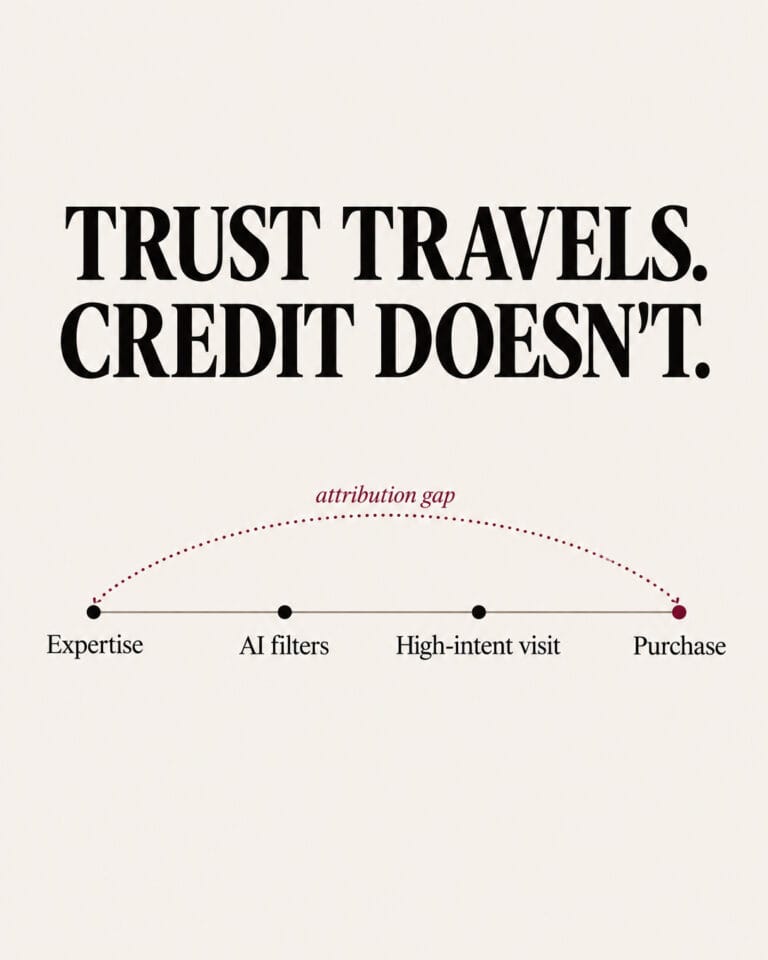
The practical path: run last-touch and first-touch reports simultaneously. Where they diverge significantly, you have affiliates who are either getting credit they did not earn (last-touch over-crediting) or not getting credit they did earn (first-touch under-crediting). Use that divergence to inform which affiliate types you invest in and which attribution adjustments you make.
Section 7: Why Affiliate Programs Fail And How to Fix Them
The failure mode taxonomy below is drawn from six years of operator experience, pattern-matched against Rewardful’s platform data, practitioner analysis from affiliate managers like Matt McWilliams, and the recurring complaints I see from founders on Indie Hackers and in affiliate marketing communities. Each failure mode has a distinct root cause and a distinct fix. Treating them as the same problem, “the program isn’t working,” is why most remediation attempts fail.

Failure Mode 1: The ghost army
What it looks like: Many enrolled affiliates, almost no activity. The platform shows 300 partners; two are actively promoting.
Root cause: Poor recruiting criteria combined with no activation sequence. The program accepted anyone who applied, sent a welcome email with a login link, and provided no structured path to a first action.
This is more common than most program managers want to admit. In one program I reviewed, 7% of partners were generating 90% of revenue. The remaining 93% were, for all practical purposes, not in the program at all. They just had login credentials and occasionally showed up in the total partner count. One Growann client found a similar pattern: 92% of affiliate program revenue came from just 13 partners out of a network of 1,000-plus.
When I inherited a program with that level of concentration at another agency, we brought the top-partner revenue share down from 90% to roughly 60% in ten weeks. Not by touching the top performers, but by activating medium and long-tail partners who had strong audience fit and had simply never been properly engaged.
Fix: Run an affiliate audit. Segment enrolled affiliates by activity level and apply the Affiliate Recruitment Scorecard retroactively. For affiliates who score 6 or above, run a reactivation sequence (see Section 8). Remove affiliates who score below 6 and show no activity after a reactivation attempt. Going forward, apply the Scorecard at application and stop accepting affiliates who are unlikely to activate.
The uncomfortable truth about ghost armies: most of them are built on purpose, just not intentionally. Programs open applications to anyone, celebrate the affiliate count number, and then wonder why revenue is not following. The number of affiliates you have enrolled is not a success metric. It is a database headcount.
Failure Mode 2: Commission structure that punishes loyalty
What it looks like: Top affiliates promote heavily for two or three months, then go quiet or leave for a competitor’s program.
Root cause: A one-time commission structure, or a recurring structure that expires, on a product the affiliate could promote repeatedly. The incentive runs out before the relationship does.
Fix: Introduce a recurring commission or a milestone-based bonus structure that rewards affiliates for sustained performance. An affiliate who sees a growing monthly income from their referrals will promote indefinitely. An affiliate who got paid once will move on.
Failure Mode 3: Affiliate assets that do not match the ICP
What it looks like: Affiliates have banners and copy, but they are not using them. The content affiliates produce about your product is vague or generic.
Root cause: The marketing team built assets for direct traffic, buyers who already know the company, not for affiliate audiences who are hearing about the product for the first time through someone they trust.
Fix: Co-create assets with two or three of your top affiliates. Ask them what their audience actually needs to understand about the product, what objections they encounter, and what format works best for their channel. The resulting assets will be more useful to every other affiliate in the program.
Failure Mode 4: 30-day cookie on a 90-day sales cycle
What it looks like: Affiliates report traffic but low commissions relative to effort. Conversion data is thin. Affiliates conclude the program is not worth their time.
Root cause: Your attribution window is shorter than your average sales cycle. You are failing to assign commission for conversions that are happening. The affiliate’s referral is just too old to credit when the sale closes.
Fix: Extend the attribution window to match your actual median time to purchase. If your sales cycle is 60 to 90 days, set your cookie to 90 days. If it is longer, go to 120 or 180. Consider a first-touch hybrid attribution model for affiliates who are introducing buyers at the top of the funnel.
Failure Mode 5: Affiliates who are not actually trusted by their audience
What it looks like: High click volume from certain affiliates, very low conversion. Traffic arrives but does not convert at the rate your other traffic does.
Root cause: You accepted affiliates based on audience size rather than audience trust and relevance. A newsletter with 50,000 subscribers who ignore product recommendations is less valuable than one with 2,000 subscribers who buy what the author endorses.
Fix: Apply the Affiliate Recruitment Scorecard retroactively. Affiliates with high audience size but low promotion depth and low existing trust scores are your conversion problem. Phase them out or move them to lower-priority tiers.
Failure Mode 6: No human relationship at the affiliate program
What it looks like: The program launched with a platform, a commission rate, and an automated welcome sequence. No one at the company has ever had a personal conversation with an affiliate. Activity has been declining for months.
Root cause: Treating the program as a software problem instead of a people problem. The platform handles tracking; the relationship is what keeps affiliates engaged, motivated, and prioritizing your program over the ten others they could promote.
Fix: Dedicate two hours a week to direct affiliate relationship work. Personal messages to your top ten affiliates. Responses to affiliate questions that feel human, not templated. Even this minimum level of relationship investment produces measurable changes in activity. Two hours a week, sustained over a quarter, outperforms most platform upgrades.
The failure mode no one writes about: organizational continuity.
“We launched affiliate and then our head of marketing left. Nobody owns it now.”
This is one of the most common affiliate program deaths I see, and it is entirely absent from published content on the topic. An affiliate program depends on a named human owner internally. When that person leaves and no one inherits the role explicitly, the program does not shut down. It quietly dies. Affiliates stop hearing from anyone. New applications sit unapproved. Commission reviews get skipped. Within six months, the active affiliate rate has collapsed.
The fix is not software. It is organizational: document program ownership, build runbooks that survive personnel changes, and treat the affiliate program as a function with an owner, not a project that someone happens to manage.
Section 8: Reactivating Dormant Affiliates
Every affiliate program accumulates dormant affiliates. Even programs with strong onboarding sequences and active management end up with a segment of partners who were once engaged and have gone quiet. Reactivating them is almost always a better use of time than recruiting replacements. You have already done the relationship work, they already know your product, and they have already proven they were willing to promote once.
The reactivation rate for affiliates dormant three to six months is 10 to 20% with a well-executed outreach campaign. Even at the low end, 10% reactivation of 500 dormant affiliates is 50 new active promoters without a single new recruiting conversation.
The two types of dormant affiliates
There are two fundamentally different dormant affiliate profiles, and you cannot reactivate them with the same message.
The first type fully intended to promote and had something get in the way: a busy quarter with client work, a life event, a technical problem they never asked about, an unclear next step they could not figure out on their own. These affiliates are the most reactivatable. They were never disengaged. They were interrupted.
The second type signed up out of curiosity or mild interest, had no real intention to promote, and forgot about the program within a week of joining. These affiliates will not respond to a reactivation sequence and should eventually be removed.
Segmenting by this distinction before you send anything is the most important step in a reactivation campaign. You can approximate it by looking at behavior signals: did they ever log in after signup? Did they ever click on any of the onboarding emails? Did they generate any clicks before going quiet? An affiliate who generated clicks and then stopped is a very different reactivation candidate than one who has never done anything.
The reactivation sequence
Step 1: Define dormancy. An affiliate who has generated zero clicks in 60 days is effectively dormant. After 90 days of inactivity, the reactivation rate drops meaningfully without direct personal outreach.
Step 2: Segment by reason. Three primary groups: never activated (no clicks ever), launched but no sales (sent traffic, no conversions), and formerly active then stopped. Each group needs a different message. Never-activated affiliates may not even remember signing up. Formerly active affiliates who went quiet are the highest-reactivation-probability segment.
Step 3: Personalize the outreach. Mass “we miss you” emails do not work. The subject line “Everything okay, [first name]?” reads like a human sent it, not a campaign. Matt McWilliams, who has tested more affiliate reactivation sequences than anyone I am aware of, reports that this subject line outperforms every more elaborate alternative. It reads like a personal check-in. The body should be five sentences or fewer and close with “Let me know how I can help.”
Step 4: Include a concrete hook. A reason to act right now, specific to their situation: a new product feature that fits their audience, a limited bonus commission window for this month, a co-marketing opportunity, a piece of content you created specifically for their channel. Generic “come back” messaging without a specific reason to act rarely succeeds.
Step 5: Two attempts over 30 days, then a decision. If there is no response after two personal outreach attempts within 30 days, move the affiliate to an inactive list. Do not continue sending them standard newsletters. The deliverability damage from chronically non-engaging subscribers is real, and more emails will not change a decision that has already been made.
What works for B2B SaaS dormancy specifically
B2B SaaS affiliate dormancy has different causes than e-commerce affiliate dormancy. A consultant affiliate who goes quiet is usually not disengaged from your product. They are buried in client work and have deprioritized promoting anything. The reactivation hook that works for them is not a bonus commission. It is a new use case or integration that fits the clients they are currently serving. A newsletter affiliate who has gone quiet often needs a new content angle, specific talking points about your product they have not written about yet, or fresh data they can use in a piece.
The generic reactivation levers, bonus commissions, seasonal campaigns, discount codes, are largely borrowed from e-commerce playbooks and do not map well onto B2B SaaS affiliate behavior. Build your reactivation program around what actually interrupts a B2B SaaS affiliate’s daily work: new information, new opportunities for their clients, and a reason to reach out.
When to remove affiliates entirely
An affiliate who has been in the program for 12 months, has never generated a single click, and has not responded to two reactivation attempts should be removed. The operational cost of carrying permanently dormant affiliates is not zero: they inflate your total affiliate count and deflate every performance metric that uses it as a denominator, they consume list slots that suppress email deliverability, and they create a false picture of program scale.
Carrying 500 names in a database when 470 of them will never do anything is not a safety net. It is a distortion. A clean list of 150 active affiliates is more valuable in every practical sense.
Section 9: Affiliate Platforms for B2B SaaS – What to Know Before You Choose
A note on perspective: I have no commercial relationship with any of the platforms below. No referral agreements, no co-marketing arrangements, no vendor affiliation of any kind. Every assessment that follows is from the operator side.
The platform comparison problem in affiliate marketing is that almost all of it is written by the platforms themselves, or by review aggregators who earn commission from the platforms they recommend. The result is that no one says the hard things: that PartnerStack is overkill for most early programs, that Impact.com’s hidden fees can double your apparent cost, or that only three of the major platforms have affiliate marketplaces, which means choosing the other three commits you to recruiting every affiliate yourself.

PartnerStack
Best for: Mid-market B2B SaaS ($1M-plus ARR) running affiliate, referral, and reseller programs simultaneously.
PartnerStack is genuinely good at one thing: giving you access to its marketplace of 115,000-plus B2B-focused partners who are actively looking to promote software. If you need inbound partner discovery at scale, nothing else in this category competes.
The problem is that most programs do not need that yet, and PartnerStack’s pricing assumes they do. The subscription cost plus a take rate of 3 to 15% on every partner payout adds up fast, and the real monthly cost tends to land well above whatever the sales call suggested. I have watched founders choose PartnerStack because it felt like the serious option, spend months trying to justify the cost, and eventually migrate to something simpler.
The reporting is also genuinely underpowered for program-level analysis. G2 reviews flag it consistently, and in my experience the dashboard tells you less than you need to make good decisions about which affiliates are worth your time.
One more thing worth flagging if you are considering PartnerStack’s marketplace as a recruitment channel: the fraud detection does not match the price tag. For what PartnerStack charges, I would expect the platform to be actively catching bad actors in its own network. Instead, monitoring falls back on you. Build that into your management time before you commit.
Notable customers: Monday.com, Asana, Typeform, PandaDoc, FreshBooks.
Impact.com
Best for: Large brands and enterprises running complex multi-channel partnership programs.
Impact.com is the right tool if you are Uber or Adobe. The fraud detection is best-in-class, the multi-channel attribution is genuinely sophisticated, and the $120 billion in annual partner-referred GMV it processes is not marketing language. The platform is built for that kind of volume.
If you are not running an enterprise-scale program: there is no point buying a Ferrari when you just got your license. Not because the car is bad, but because you do not have the infrastructure, the team, or the track record to get anything out of it yet. Impact.com is the Ferrari. Come back to it when you are ready.
What that means in practice: the stated pricing tiers are Starter at $30/month or 2.5% of revenue (whichever is higher), Essential at $500/month, and Pro at $2,500-plus. What that does not include: setup fees, wire transfer fees, ad hosting fees, and custom report fees, which in practice can double the apparent cost. User reviews on Trustpilot and G2 flag support quality as a persistent issue, not an occasional one.
If your program is below $10M ARR, you are paying for features you cannot operate without headcount you do not have yet. Start elsewhere.
Notable customers: Uber, Walmart, Shopify, Adobe, Canva.
Rewardful
Best for: Early-stage SaaS on Stripe or Paddle, from pre-revenue to roughly $500K ARR.
Rewardful does one thing exceptionally well: getting you from zero to a functioning affiliate program in under 15 minutes if you are already on Stripe. For early-stage SaaS companies testing whether affiliates will convert before committing to a monthly platform fee, it is the right starting point. Pricing is fully public: Starter at $49/month, Growth at $99/month, Enterprise at $149-plus. No transaction fees.
The limitations are real. There is no affiliate marketplace, so you recruit every partner yourself. The analytics are basic, and not in the charming, simple way. If you want to offer a specific partner a custom commission rate, run a tiered structure, or do anything outside the default setup, the platform will not accommodate it without significant workarounds. The reporting is the weakest part, and it does not improve the more you need from it.
The default affiliate dashboard also displays active, suspended, and flagged accounts all in the same view with no way to filter between them. For a platform managing your program’s data integrity, that is a strange call.
None of these are dealbreakers at the stage Rewardful is designed for. They become dealbreakers around 50 to 100 active affiliates, which is when most programs outgrow it.
Tapfiliate
Best for: SMBs across SaaS and e-commerce that need broad integration support and are not yet at the scale where PartnerStack is justified.
Pricing is fully public: Essential at $89/month, Pro at $149/month, Enterprise at $499-plus. Overage fees apply at $0.45 per 1,000 clicks over limit.
Watch out for: Overage fees that catch programs off guard when traffic spikes; API changes that have broken integrations without notice; limited SaaS-specific features compared to platforms built for subscription billing. No affiliate marketplace.
FirstPromoter
Best for: SaaS companies on Stripe, Paddle, Chargebee, or Recurly. The broadest billing platform support at this price tier, and the strongest user review scores for customer support.
Pricing is fully public: Starter at $49/month, Business at $99/month, Enterprise at $149-plus. No transaction fees.
Watch out for: Browser-only tracking, which is susceptible to Safari ITP and ad blockers. That is a meaningful technical limitation when a significant portion of professional audiences use Safari. No affiliate marketplace. No automated tax form collection.
Reditus
Best for: B2B SaaS companies at any stage. The only platform in this set designed exclusively for B2B SaaS. The free tier ($0 up to $1,000 MRR generated) makes it the most accessible starting point for founders validating whether affiliates will convert before committing to a monthly platform fee.
Pricing is fully public and MRR-based: free tier to $71/month (Startup) to $119/month (Growth) to $239/month (Scale) to $449/month (Scale-plus). 1% payout processing fee via Stripe.
Watch out for: PayPal-only payouts and a smaller ecosystem than PartnerStack or Impact.com. Strictly B2B SaaS – cannot be used for other business models.
The Platform Selection Decision Tree
- Under 20 affiliates, Stripe billing: Rewardful ($49/month) or Reditus (free tier)
- Under 100 affiliates, need more reporting depth: FirstPromoter or Tapfiliate
- 100-plus affiliates, or you need marketplace discovery: PartnerStack
- Complex enterprise multi-channel program: Impact.com
The most important thing to know before you choose: only PartnerStack, Impact.com, and Reditus have affiliate marketplaces. For Rewardful, Tapfiliate, and FirstPromoter users, affiliate recruitment is entirely self-directed. You find every affiliate yourself. This is a meaningful operational commitment that most buyers do not realize until after they have purchased.
Section 10: Should You Hire an Affiliate Program Manager?
The answer depends on where your program is and what you need from it. But before getting to the decision framework, it helps to understand what an affiliate program manager actually does, because the role is consistently misunderstood.
An affiliate program manager is not a growth hacker who will activate a dead program with clever campaigns. They are not primarily a technical specialist who manages tracking infrastructure. They spend most of their time on relationships, content production, data review, and compliance monitoring. The role is one part marketing, one part account management, and one part operations. It is a discipline that requires genuine depth to do well.
When to hire
Three signals that your program has outgrown whoever is currently responsible for it:
More than 30 active affiliates. At that scale, the relationship management requirement, individual check-ins, personal outreach, asset creation for specific partners, exceeds what someone can do on the side. Affiliate management becomes a real time commitment somewhere between 20 and 30 active partners.
Affiliate revenue above 10% of total company revenue. At that contribution level, the channel deserves dedicated management in the same way any channel at 10% of revenue would.
No one at the company has spoken directly to an affiliate in the past 30 days. This is the clearest operational signal. If no one owns the relationships, the program is running on inertia, and inertia eventually runs out.

The three models
DIY. The founder or a generalist marketer manages the program as part of a broader role. This is appropriate before product-market fit, or while you are testing whether affiliates will convert at all. The cost is your time; the risk is that affiliate management gets deprioritized when other things are urgent, which it always will be.
Freelance consultant. A specialist who works 10 to 20 hours a month on your program: auditing, strategy, fixing specific problems, building out the onboarding sequence, and doing the recruiting and activation work that requires genuine expertise. Freelance affiliate consultants typically charge $2,000 to $10,000 a month depending on scope. This model works well for programs between 20 and 100 active affiliates that need specialist depth without a full-time hire.
In-house hire. A dedicated affiliate program manager, fully embedded in your product and team. US salary benchmarks for 2025 to 2026: $96,630/year (Indeed, 162 job postings) to $135,653/year (Glassdoor average). Fully loaded with benefits, payroll tax, and overhead, plan for $120,000 to $175,000 per year. This investment is appropriate when affiliate revenue is generating $300,000 or more annually, or when the program is central to your growth strategy.
OPM agency. An outsourced program management agency brings an existing publisher network, tested playbooks, and no hiring requirement. Pricing is generally $2,000 to $10,000 a month, with ThriveOPM as one of the few firms with published pricing ($2,000 to $4,000/month plus program setup). Acceleration Partners, Hamster Garage, and PartnerCentric are larger and do not publish rates.
The honest assessment of OPM agencies for B2B SaaS programs: they are best suited for launch phases where you need to move fast and lack internal bandwidth. The recurring limitations to be aware of: attention is divided across multiple clients; day-to-day management often falls to junior account managers; agency publisher relationships tend to skew toward consumer-facing programs, not B2B SaaS; and the relationships the agency builds with your affiliates do not transfer to you when you eventually bring the program in-house. Plan for that transition from the start.
Questions to ask when evaluating affiliate program consultants or managers
Have you managed programs from the operator side, not the vendor or agency side? Operator-side experience means understanding program health from the inside, knowing what it actually costs to run a program, what the real failure modes look like, and how to fix them without adding tool spend.
Can you share specific program performance improvements you have driven? Not platform capabilities or campaign concepts – actual before-and-after outcomes from programs you have managed.
Do you have any vendor relationships that might influence your platform recommendations? An affiliate consultant who earns referral commissions from the platform they recommend you buy is a conflict of interest that will cost you money.
If you’d rather have someone run this for you, let’s talk about your program.
Frequently Asked Questions
About the Author
Nicole Pyzyk has spent six-plus years managing affiliate and partner programs for B2B SaaS companies. Most of that time was at MailerLite, where she came up through customer support and customer success before moving into partnerships and eventually taking over the affiliate program. No formal marketing training. A lot of trial, error, and stubbornness.
By the time she left, the program was generating over $4.2M in annual revenue. She has since worked on multi-client affiliate program management through Affilial, an agency for B2B SaaS companies, and takes on a small number of independent consulting engagements for founders and growth leads who need someone who has actually built and fixed programs at scale.
She writes about affiliate program management at nicolepyzyk.com
This guide was last updated May 2026. All benchmark data is sourced and dated; see inline citations for primary sources.


4 Comments on “Affiliate Program Management for B2B SaaS: The Complete Operator’s Guide”