Why Affiliates Sign Up and Never Promote (And What to Do About It)
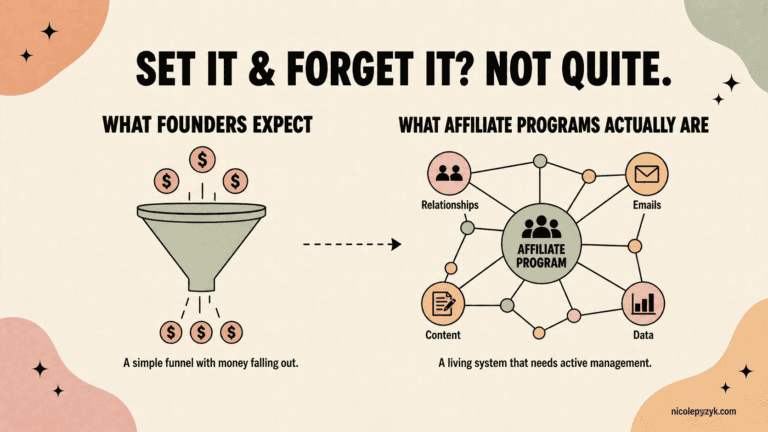
Open the dashboard of a typical B2B SaaS affiliate program and you will find more dormant affiliates than active ones. People signed up, received their tracking links, and then went silent. If you run a program, you probably recognize this.
The default explanation inside companies is that these were low-quality recruits. They wanted the commission, had no real audience, and were never going to promote.
Some of that is true. The explanation also lets the program off the hook for structural failures that usually sit within your control.
What follows is the diagnostic framework I use across the programs I manage.
The Activation Numbers Tell a Different Story
In many programs, the dormant majority is impossible to ignore. When I start working with a new program, I usually find that 60 to 80 percent of partners have never generated a single referral. Industry data points the same way, though different datasets define activation differently, which is part of why benchmarks need context. Rewardful found that 7.6% of affiliates generated at least one referral, and just 1.28% generated a sale.
TrackRev, using a stricter definition of a paid conversion within 30 days, puts its median activation rate at roughly 18 percent, with bottom-quartile programs sitting at 6 percent. In the programs I’ve audited, the ones with the lowest activation tend to share a trait: affiliates sign up and never hear from anyone again.
When the clear majority of your affiliate base is dormant, the program itself is the variable worth investigating. The programs with the worst activation rates in my experience are often the ones that recruited the hardest. Hundreds of names in the dashboard, almost none producing.
Volume layered on top of unclear infrastructure usually just produces more silence, at scale.
Why “They Just Weren’t Motivated” Is the Wrong Diagnosis
Motivation sits downstream of clarity. An affiliate who does not know who to target, what to say, or how to land a first referral is stuck. Stuck affiliates rarely email you for help. They move on to something else and never mention it.
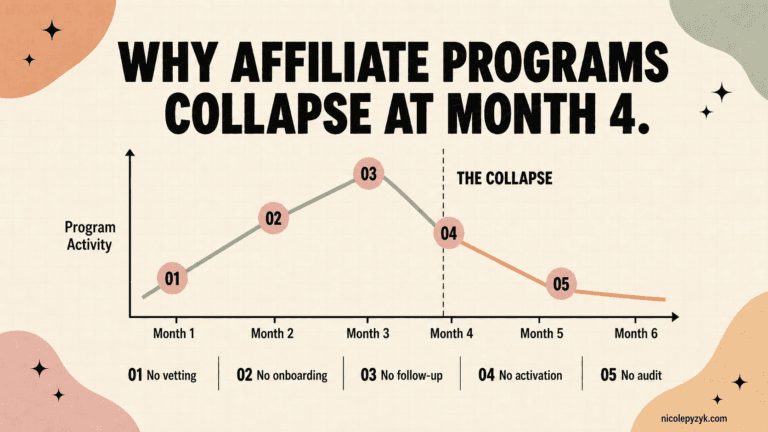
In my audits, silence traces back to one or more of four causes. Many programs have all four at once.
1. They never understood what they signed up to promote
This starts at recruitment. When you post your program on directories and accept everyone who applies, you bring in affiliates with no genuine connection to your product and no audience that would buy it. The commission looked good, they logged in once, and they had no idea where to start. That expectation mismatch was created before they ever joined.
2. The onboarding explained what, and skipped how
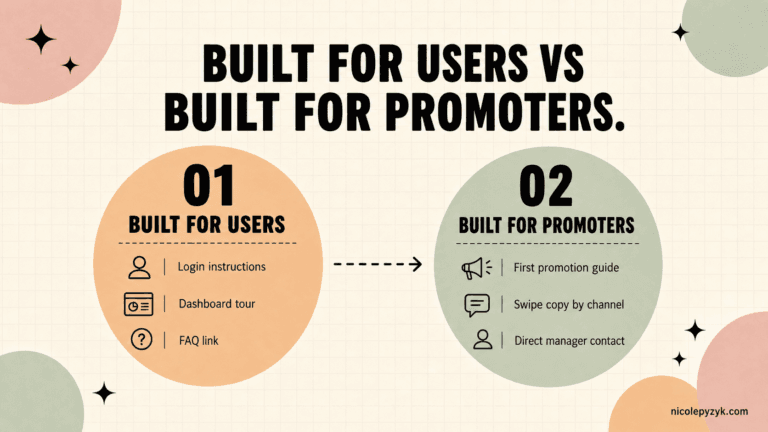
Standard affiliate onboarding delivers a tracking link, a folder of creatives, and a product overview. That is informational onboarding. It tells affiliates what they have access to.
It skips the question the affiliate is actually asking: what do I do first? There is a real difference between handing someone a fishing rod and showing them where the fish are. Informational onboarding hands over the rod and stops.
3. There was no early win
The first conversion carries disproportionate weight. Affiliates who get an early result tend to keep promoting. The longer someone goes without any traffic or conversions, the less likely they are to become productive later.
This is psychology, in plain terms. When someone puts in effort and gets nothing back, they usually stop putting in effort.
4. No one followed up
One welcome email, then silence from the program side. The affiliate got stuck somewhere, did not know who to ask, and drifted. A single message from a real person at the right moment can change this outcome, and many programs never send it.
What Activation-Focused Onboarding Includes
A useful onboarding sequence usually needs more than one welcome email. The exact timing depends on the program, but the sequence should generally do three jobs: orient the partner, help them take a meaningful first action, and give them a human point of contact if they get stuck. Here is one example of how that might look over three weeks.
- Week 1: Orient. Confirm the affiliate understands the product, the ideal customer, and the commission structure. Keep it short.
- Week 2: Activate. Give them a first promotion assignment: one specific action they can take this week toward a first referral.
- Week 3: Check in. A direct, personal message asking how it is going and offering help.
Three touchpoints with clear jobs are often more useful than a twelve-email automation that nobody reads.
Give them a promotion plan, with the assets
A folder of banners removes very little friction for someone new to promoting B2B SaaS. You need to remove the blank-page problem. That means a suggested first channel, a recommended angle tied to the problem your product solves for their existing audience, and ideally an example of how another affiliate in your program promoted it successfully. You do not need to write their content for them.
Define an early activation milestone that fits your program
Pick an early milestone that actually means something in your funnel. Depending on your product, that might be a first click, a qualified lead, a trial signup, a booked demo, or a first sale. Then put a reasonable time window around it based on how your funnel really works. A self-serve tool with a free trial and a product that needs a sales call shouldn’t share the same deadline. Once you’ve defined it, tell affiliates what it is. A clear, achievable target gives them something specific to aim for, and it gives you a clean signal: an affiliate who hasn’t reached it by the end of the window needs a check-in, and you know when to step in.
Build in a human touchpoint
Automated sequences are useful and insufficient on their own. Early in the onboarding window, someone on your team needs to send a direct message that acknowledges who this affiliate is and what they are promoting. This is one of the highest-value touchpoints I use. Affiliates who receive it tend to ask more questions and attempt more promotions. It needs to be real, and it can be short.
How to Reactivate Inactive Affiliates Already in Your Program
To reactivate inactive affiliates, start by segmenting them based on what they did before they went quiet. A partner who never logged in needs a different message from someone who generated clicks but never converted. Mass reactivation blasts usually underperform because dormant affiliates did not all stall for the same reason.
- Never logged in. They may not remember who you are. Reintroduce the program briefly.
- Logged in, no clicks. They got stuck before starting. Remove the first-step friction.
- Clicks, no conversions. They tried and failed to convert. This points to audience fit or messaging, and it needs a different conversation entirely.
For the first two segments, a good message does three things. It acknowledges the quiet period without guilt-tripping. It offers one concrete first step. It asks one question, so replying is easy.
Skip the fake urgency and the “we miss you” copy. A wall of text about potential earnings reads like marketing. This needs to read like a person.
Timing matters more than many managers expect. The longer an affiliate has been quiet, the harder they usually are to bring back. They forget the product, commit their attention to other programs, and never build the habit of promoting you. Reach out early, while your program is still fresh in their mind.
Know when to stop
An affiliate who joined six months ago, never logged in, and ignored two direct outreach attempts probably isn’t coming back. Some do, but at that point chasing them rarely justifies the time. Remove them from your active list with a short, friendly note that leaves the door open. Keeping them inflates your numbers and dilutes your attention.
Recruit for Activation From the Start
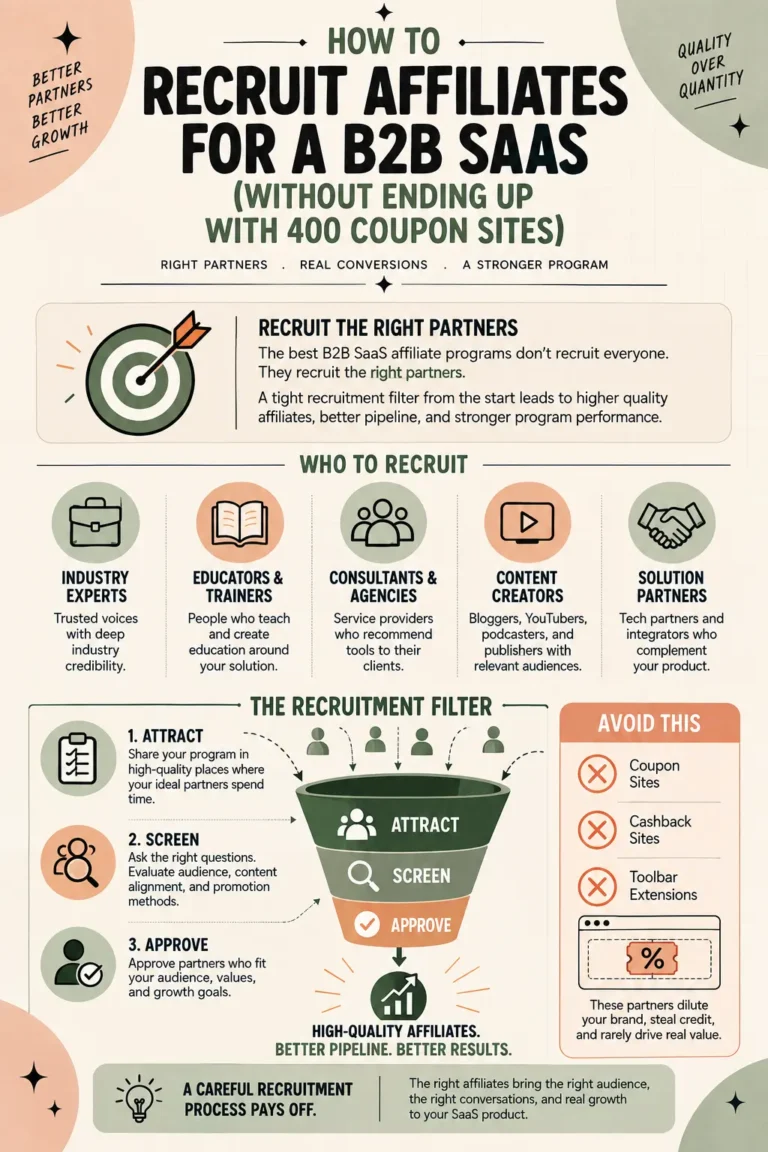
Everything above gets easier when recruitment serves activation. The vetting questions change: Does this person have an audience that would buy this product? Do they already use a channel where they talk about adjacent topics? Have they promoted B2B SaaS before?
In my experience, being selective pays off. A program with 50 well-matched affiliates can easily outperform one with 500 broadly recruited names, and it usually takes far less of your time to manage well.
Fix the Four Causes, Starting Where Your Program Breaks
Affiliates who sign up and never promote are telling you something specific about your program. Unclear expectations at recruitment, onboarding that informs without activating, no path to an early win, and no follow-up when things go quiet. Which one to tackle first depends on what your diagnosis shows. If most of your dormant affiliates never logged in, start with recruitment and onboarding. If they’re clicking but not converting, look at audience fit and messaging first.
If you recognized your program in more than a couple of these, the problem is probably structural, and structural problems tend to respond to deliberate fixes rather than extra effort. Start by segmenting your dormant list this week. That exercise usually shows you where your program breaks down, and it costs nothing except an hour with your data.