Affiliate Newsletters That Activate: Playbook for B2B SaaS Managers
An affiliate newsletter is the recurring email a B2B SaaS company sends to its own affiliate partners, not a creator’s monetized email list. It exists to keep partners informed, activated, and selling. The single practice that separates a newsletter partners open from one they ignore is consistency: a predictable cadence, content that actually helps affiliates make money, and exactly one clear ask per send.
TL;DR:
- Send affiliate newsletters every four to six weeks with clear promotion deadlines and fresh creative assets to keep affiliates motivated and prepared.
- Tailor content based on affiliate segments such as activity level, channel, and role to maintain relevance and drive engagement.
- Use a dedicated email service provider for better segmentation, deliverability, and to automate triggered sequences that increase affiliate activation.
- Maintain a simple, repeatable template with key slots for a performance metric, success stories, new assets, current promos, and a single call to action.
- Focus on consistent cadence and useful content, as these factors significantly improve open rates and overall affiliate engagement over sporadic or vague communication.
Table of Contents
- What Should an Affiliate Newsletter Include?
- How Often Should You Send Affiliate Newsletters?
- Which Affiliate Segments Should Get Different Content?
- Where Should You Send Affiliate Newsletters From?
- What’s a Good Affiliate Newsletter Template?
- What Metrics Actually Matter for Affiliate Newsletters?
- Why the Newsletter Is the Least Talked-About Lever in Affiliate Success
- Get the Templates That Make This Easier
- Sources
What Should an Affiliate Newsletter Include?
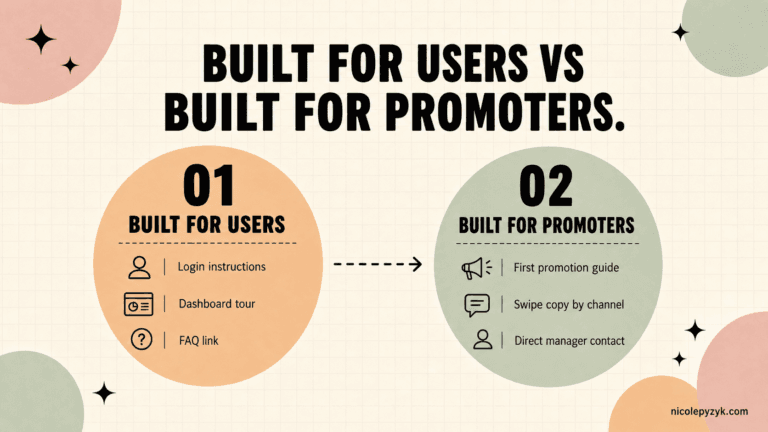
Most underperforming affiliate programs I’ve reviewed treat their partner newsletter like a company blog digest. That’s the wrong model. Affiliates don’t want your news; they want ammunition to sell.
A newsletter that gets opened and acted on prioritizes content slots in a specific order, because affiliates skim before they read:
- Promotion dates and deadlines first. If there’s a sale, a discount window, or a limited-time bonus commission, that belongs at the top with a direct call to action, not buried after three paragraphs of updates.
- New creative assets with direct download links. Banners, swipe copy, comparison charts. If affiliates have to hunt for files, most won’t bother.
- Product updates reframed as sales angles. Don’t just announce a new feature. Tell affiliates exactly how to pitch it and to whom.
- Performance data and trends. Which channels are converting, which content formats are working right now, so affiliates can plan their next push instead of guessing.
- Concrete affiliate success stories with real numbers. “Sarah generated $4,200 in commissions using a comparison landing page and a three-email sequence” teaches more than any generic tip.
- Enablement resources, like webinars or one-page playbooks, tied to one clear ask per send.
Successful affiliate newsletters consistently include this mix of promotion dates, creative assets, performance trends, and success stories, and partner-focused vendor newsletters often layer in product updates and enablement content so affiliates can tailor their pitches without waiting on you.
How Often Should You Send Affiliate Newsletters?
Cadence is where most B2B SaaS programs either build trust or quietly train affiliates to ignore them. Send too rarely and affiliates forget you exist between commission checks. Send too often with nothing useful and they unsubscribe or, worse, stop opening without unsubscribing at all.
- Evergreen cadence: every four to six weeks. Monthly is the practical floor. Anything less frequent and affiliates lose the thread on your promotions and updates.
- Six months before a major launch: seed the idea. A short note flagging what’s coming, with no hard ask yet.
- Three months out: warm the list. Longer, more detailed sends with early creative assets and positioning angles.
- One month out: countdown mode. Shorter, more frequent sends focused entirely on the promotion mechanics, deadlines, and available assets.
This staged approach matches the recommended minimum cadence and launch warm-up timeline that mature affiliate programs use. The content shifts from context (seed) to preparation (warm) to urgency (countdown), and send length should shrink as the launch approaches. Nobody reads a 900 word email three days before a sale ends.
Which Affiliate Segments Should Get Different Content?
Not every affiliate needs the same email, and sending identical content to your top earner and someone who hasn’t logged a click in four months is how newsletters lose relevance fast.
Start with segments that actually change what you say:
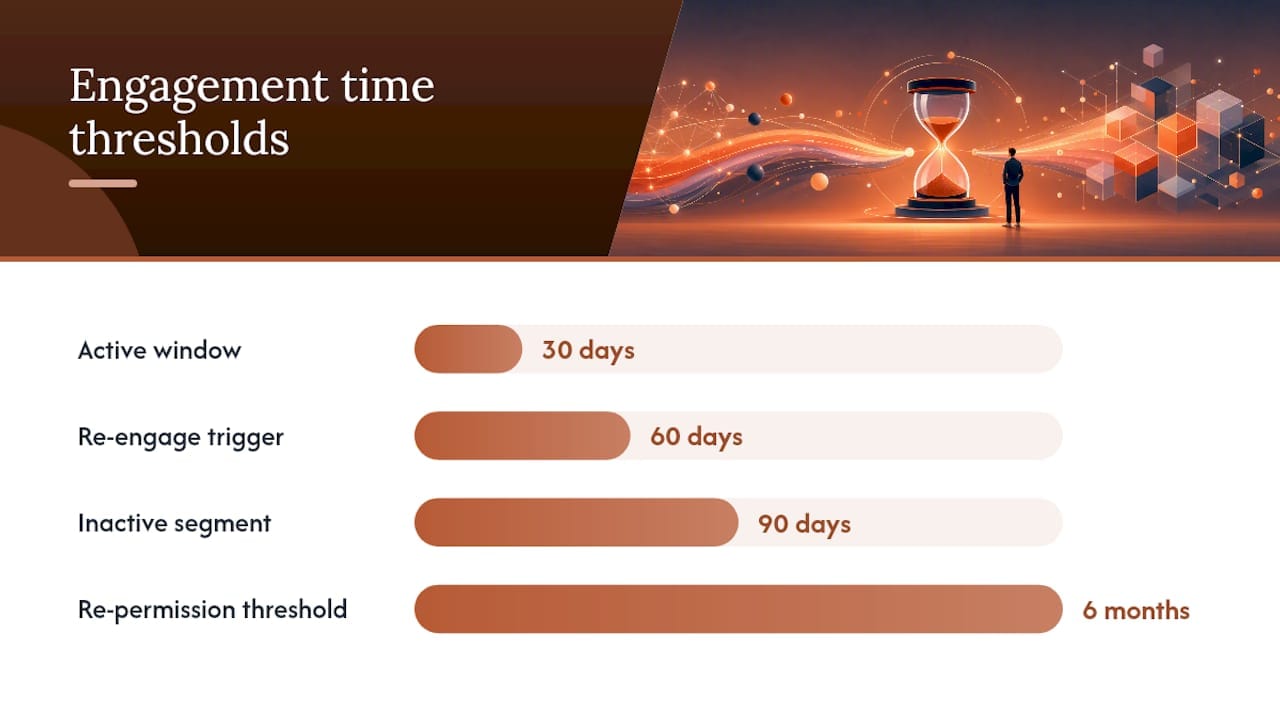
- Active vs. inactive, based on last-30-day or last-90-day engagement.
- Top-tier affiliates, who need faster access to new assets and early launch details.
- Channel-based segments, like content creators, email marketers, and comparison-site owners, since each converts differently.
- Role and lifecycle segments, separating brand-new partners from affiliates two years into the program.
Behavioral triggers do the heavy lifting once segments exist. A first-sale trigger sends a congratulations sequence. An inactivity trigger after 60 days sends a re-engagement nudge instead of your standard monthly send. A contest announcement goes only to affiliates who’ve shown promotional activity in the past quarter.
Pro Tip: Send active affiliates your full monthly update, but send inactive affiliates a stripped-down, single-ask email asking one specific question, like “Want early access to next month’s promo assets?” Reactivation copy that asks for a small yes outperforms copy that assumes ongoing engagement.
Re-permission flows matter too. If an affiliate hasn’t opened anything in six months, a one-line “still want these?” email protects your sender reputation better than silently continuing to mail a cold contact.
Where Should You Send Affiliate Newsletters From?
Most affiliate platforms can technically send email, but they weren’t built for it; using a dedicated email service provider ensures better segmentation and deliverability, essentials for effective email campaigns. A dedicated email service provider almost always gives better segmentation, deliverability, and testing tools than sending straight from your affiliate software’s built-in messaging.
The practical setup:
- Use your ESP for the newsletter itself, with segmentation rules built on affiliate behavior data.
- Sync data with webhooks, pulling events like new sign-ups, first sales, and payout milestones from your affiliate platform into your ESP so triggered sequences fire on time.
- Apply suppression rules per partner offer. If you’re promoting two different partner deals in the same month, keep separate audience logic for each rather than blasting your full list twice.
- Limit simultaneous promotions. Running three unrelated offers at once confuses affiliates and dilutes each one’s urgency.
- Monitor bounces and spam complaints weekly, not monthly, and pull soft bounces or repeat non-openers into a suppression segment before they drag down your sender score.
Treating affiliate email as a connected system, where behavior triggers on signup, first sale, and inactivity feed directly into your sends, is what separates reliable programs from ones that guess. And because deliverability and segmentation are so tightly linked, running multiple partner offers without separate audience logic can quietly damage your future sends, even when each individual email looks fine on its own.
What’s a Good Affiliate Newsletter Template?
You don’t need a new structure every month. A repeatable skeleton removes the blank-page problem and trains affiliates to know exactly where to look for what they need.
- Slot 1: one useful number. A conversion rate, a payout milestone, something concrete right at the top.
- Slot 2: top performer shout-out. Name a real affiliate and what they did differently.
- Slot 3: new assets. Direct links, hosted where affiliates already log in.
- Slot 4: current promotion with its deadline. No ambiguity about when it ends.
- Slot 5: one ask. A single action, not five competing calls to action.
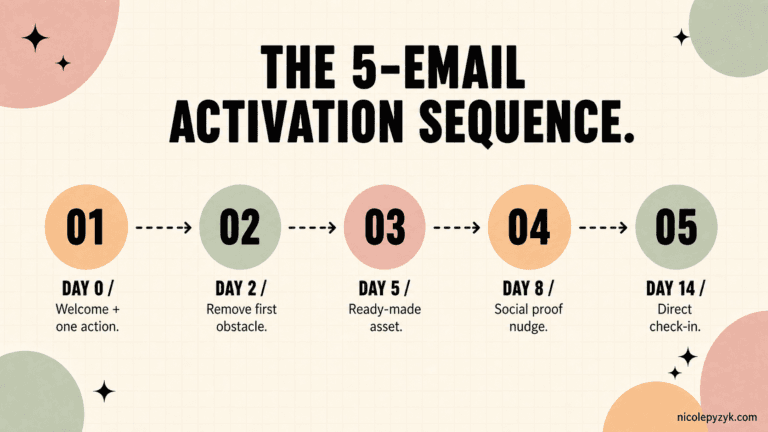
Beyond the monthly send, three automated sequences do the ongoing activation work: a welcome sequence for new sign-ups, a pre-launch warm-up sequence for major promotions, and a re-engagement sequence for affiliates who’ve gone quiet.
| Sequence | Trigger | Goal |
|---|---|---|
| Welcome/onboarding | New affiliate approved | Immediate welcome, activation steps, first-sale congratulations |
| Pre-launch warm-up | Six months before major launch | Seed → warm → countdown cadence building toward launch day |
| Re-engagement | 60 to 90 days of inactivity | Single low-friction ask to restart engagement |
Host creative assets inside your affiliate portal rather than a public content delivery network. Portal hosting keeps assets tied to log in data so you can track who’s actually downloading what, and it avoids leaking co-branded material to search engines. A ready-made version of this exact skeleton, along with the onboarding sequence structure that pairs with it, saves most teams weeks of trial and error. Keep sends under 400 words outside of launch countdown mode, when shorter is better still.
What Metrics Actually Matter for Affiliate Newsletters?
Open rate is the first signal, and B2B affiliate newsletters that run a consistent cadence with useful content typically land between 15% and 35% open rates, with results trending toward the top of that range as cadence and content quality improve.
Beyond opens, track click-to-convert on your promotion links specifically, not just overall clicks. An affiliate who opens every email but never clicks the promo link is disengaged in a way opens alone won’t show you.
Run small experiments monthly rather than overhauling the whole newsletter at once:
- Test two subject line styles, a number-led version against a curiosity-led version.
- Compare a single-ask send against a multi-ask send to the same segment.
- Move your primary CTA above versus below the fold.
- Split active and inactive segments on the same send to see if tailored copy changes click rates.
Feed whatever wins back into your enablement resources. If a specific success story format drives more replies than any other content slot, that’s your template for next month, not a one-off.
Why the Newsletter Is the Least Talked-About Lever in Affiliate Success
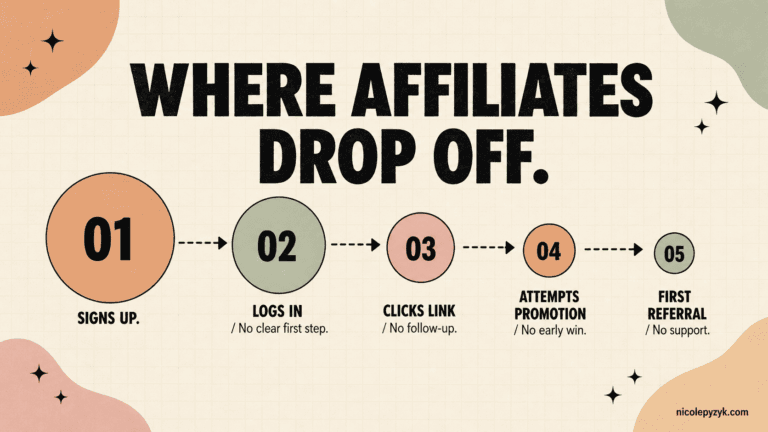
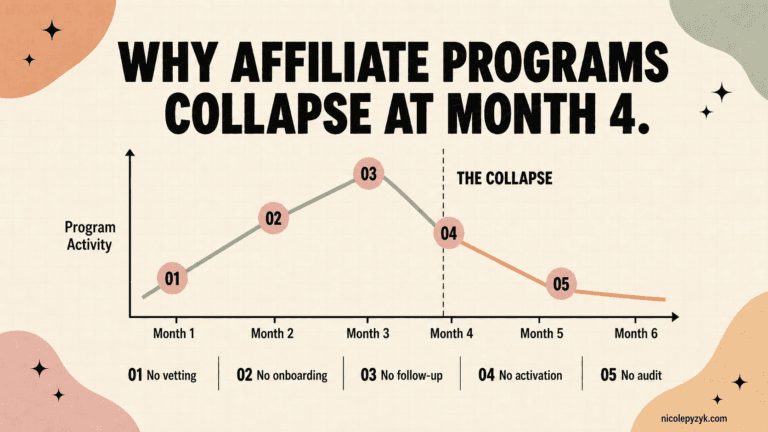
Program managers spend enormous energy on recruitment and almost none on what happens after someone joins. That’s backwards. Recruitment fills the funnel; the newsletter is what determines whether affiliates ever generate revenue at all.
The biggest miss I see is treating the newsletter as a status update instead of a warm-up tool. Affiliates who get seeded six months before a launch, then warmed at three months, sell harder on launch day than affiliates who hear about a promotion two weeks out. The newsletter isn’t the announcement. It’s the training.
Second, vague success stories waste the best content slot in the entire newsletter. “This affiliate did great this month” teaches nothing. “This affiliate added a comparison table to their landing page and their conversion rate doubled” gives every other affiliate a script to copy.
Third, discipline beats cleverness. A boring, on-time, single-ask newsletter every four weeks will outperform a brilliant but sporadic one every time, because affiliates plan around what they can predict.
— Nicole
Get the Templates That Make This Easier
Building the system above from scratch, the segmentation rules, the six-month warm-up cadence, the slot-based skeleton, takes most teams several months of trial and error. Two tools are available specifically to skip that runway.
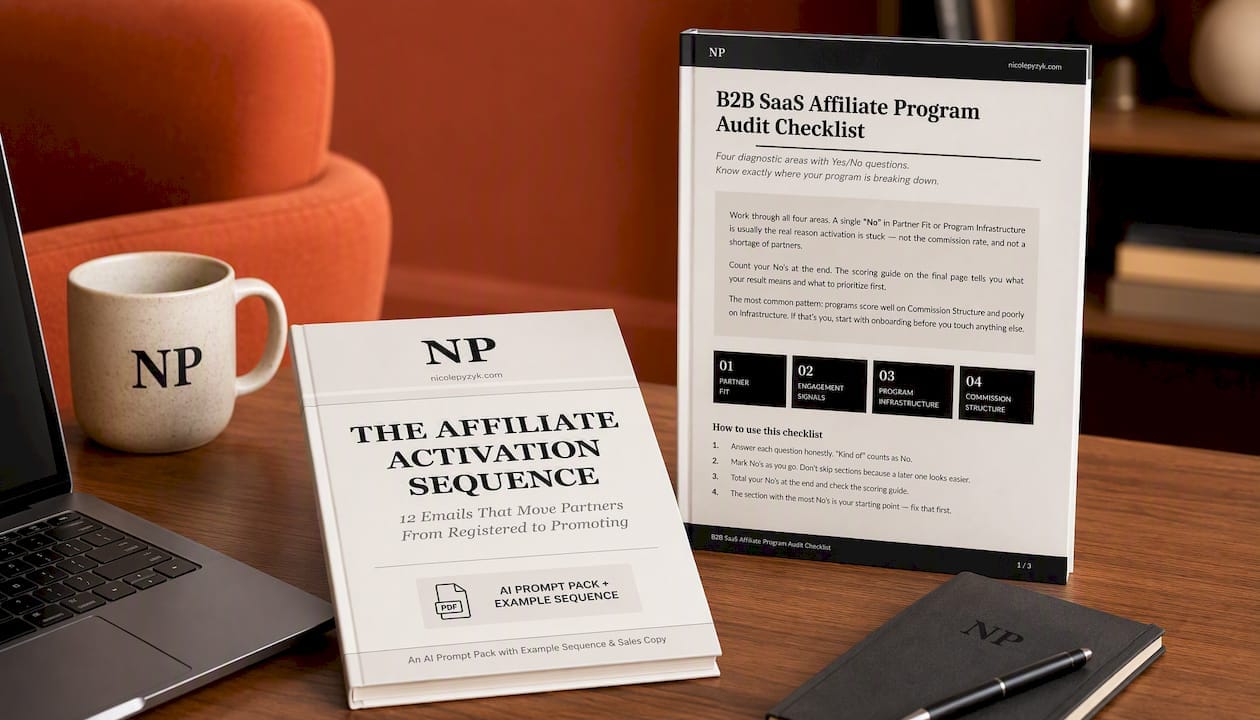
The Affiliate Activation Sequence gives you the welcome, warm-up, and re-engagement emails already written and sequenced, built for B2B SaaS programs that need affiliates active within weeks, not quarters, rather than months of guesswork on subject lines and send order. If your newsletter already exists but conversions feel flat, the B2B SaaS Affiliate Program Audit Checklist walks through cadence, segmentation, and deliverability gaps so you can pinpoint exactly what’s costing you opens and clicks before you rebuild anything. Teams running their first few sends typically start with the activation sequence; teams with an underperforming existing program start with the audit. Either way, the next step is the same: get the activation sequence templates or run the program audit and find out which slot in your current newsletter is losing you the most affiliates.
Sources
- How to Write an Affiliate Newsletter Your Affiliates Actually Read – The Affiliate Guy Matt McWilliams
- Email Marketing for Affiliate Marketing A Guide for SaaS Growth — Refgrow Blog
- Affiliate Marketing Emails: A Guide to Driving Revenue | Breaker Blog