Cold Email for Affiliate Recruitment: How I’d Actually Approach Partners
Inbound applications are useful. They are also a terrible way to control who enters your affiliate program.
If you know the kinds of partners you want, eventually you have to go find some of them yourself. For B2B SaaS, that can mean niche publishers, consultants, agencies, newsletter writers, creators, educators, integration partners, or people already influencing the exact buyers you want to reach.
Cold email is one way to start that conversation. The trick is not turning “outbound recruitment” into an excuse to dump 5,000 scraped contacts into a sequence and call the resulting silence a partner-market problem.
The email is rarely the first problem. The list usually is.
The List Comes Before the Copy
The biggest mistake in cold affiliate recruitment usually happens before anybody writes the subject line.
You need a reason each person belongs on the list.
That reason should connect three things: the audience they reach, the problem your product solves, and a plausible way they could recommend it.
“B2B creator” is not enough. “Marketing-ops consultant who works with small SaaS teams and regularly recommends tools to clients” is getting somewhere.
This is the same principle behind my broader B2B SaaS affiliate recruitment approach: deliberate recruitment gives you a partner base you can actually activate and support. A loose filter gives you a larger database.
Where I’d Look for Prospects
I would start where influence over the buying decision is already visible.
- People creating category content. Reviews, comparisons, tutorials, newsletters, podcasts, communities, or educational content around the problem you solve.
- Consultants and agencies serving your ICP. They may have smaller public audiences and much stronger influence over actual software decisions.
- People already recommending adjacent products. If their audience buys tools that sit next to yours in the stack, the fit may already exist.
- Customers with a real audience or advisory role. Existing product knowledge removes a lot of the education required before a recommendation can happen.
- Integration and ecosystem partners. Sometimes the most natural affiliate relationship starts with a product or service that already shares the customer.
I care less about follower count than whether I can explain, in one sentence, why this person’s audience could reasonably care about the product.
Research Enough to Have a Real Reason to Email
Personalization does not mean “Hi Nicole, loved your recent post!” generated from the first LinkedIn URL an enrichment tool found.
I want one real observation that proves why I picked this person specifically.
Maybe they published a comparison where your product genuinely belongs. Maybe they teach a workflow your product supports. Maybe they work with the customer profile you serve. Maybe they already recommend three adjacent tools and yours fills an obvious gap.
If I cannot find that reason, I would rather remove them from the list than manufacture a compliment.
The First Email Does Not Need to Sell the Whole Program
The first email has one job: make the conversation worth continuing.
I would keep it to four parts:
- Why them. One specific observation about their work, audience, clients, or content.
- Why the product fits. Connect what they already do to the problem your product solves.
- Why the partnership may be worth their time. The useful economic or strategic reason, not your entire terms page.
- One low-friction question. Something easy to answer without committing to the program on the spot.
Something like “Would it make sense if I sent over the details?” is enough. You do not need to attach the commission table, resource library, brand guidelines, partner agreement, and a PDF titled FINAL_AFFILIATE_OVERVIEW_v7.
Write to the Person, Not the Merge Field
Most bad affiliate outreach is technically personalized and obviously mass-produced.
The person’s first name is correct. Their company is correct. Maybe the email even references a post. But none of it explains why the sender thinks the partnership makes sense.
That is the difference I care about.
A useful cold email should still make sense if all the personalization tokens disappear. The argument underneath them has to be real.
I also prefer plain language over affiliate-program vocabulary. “I think this could be useful for the founders you advise” sounds like a person. “We are seeking strategic publishing partners to leverage our competitive recurring commission structure” sounds like somebody lost a bet.
Follow-Ups Should Add Something
“Just following up” gives the recipient the exact same information they already ignored.
If I follow up, I want a reason for the second message to exist.
That might be a relevant customer example, a clearer explanation of where their audience fits, a new integration, a specific campaign opportunity, or simply a shorter version of the original idea if the first email asked for too much attention.
I do not use a sacred number of follow-ups. A thoughtful second message can be useful. An endless automated sequence becomes a very efficient way to teach somebody to dislike your domain.
And the moment someone replies, automation stops. Positive, negative, not now, wrong person. A human answered. Treat it like a conversation.
The Tool Is the Least Interesting Part
If you are doing enough outreach to need sequencing, use a tool that can personalize, schedule, stop on reply, and give you clean enough data to understand what happened.
That is about as emotionally attached as I get to the software choice.
The tool cannot rescue a weak list or an irrelevant pitch. It can only send both of them faster.
Deliverability matters too. Use properly authenticated sending domains and inboxes, keep lists clean, and do not scale volume faster than your ability to research and respond like a human. Cold-email and privacy rules also vary by jurisdiction, so the outreach process needs to fit the laws that apply to the sender and recipient rather than copying whatever somebody on X says is “totally legal.”
What I’d Actually Track
Open rate is not the KPI I would build the process around. Privacy features and machine opens already make it noisy, and an opened email that nobody cares about has achieved very little.
I would track the funnel all the way through:
- Positive reply rate: are relevant people interested enough to continue the conversation?
- Application or signup rate: how many interested prospects actually enter the program?
- Activation: how many of those recruited partners take a meaningful promotional action?
- First result: traffic, lead, signup, sale, or whatever matters for your program.
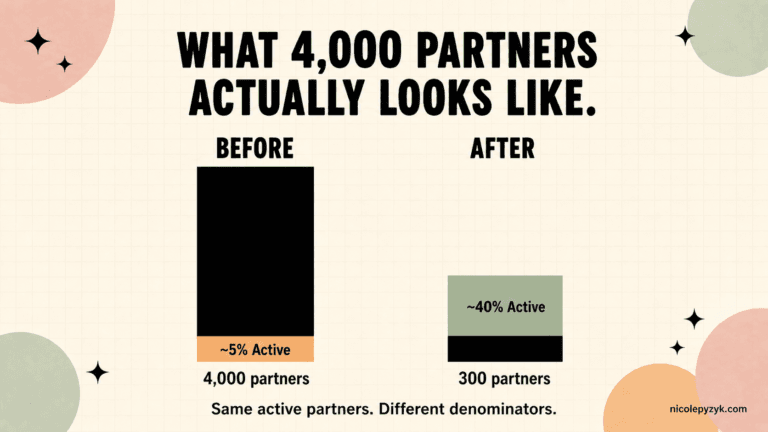
- Cohort quality: do partners sourced through outbound become useful partners, or simply better-looking inactive accounts?
That last question matters. A recruitment campaign that generates plenty of replies and no eventual partner activity is not a good recruitment campaign.
The Handoff After “Yes” Is Part of Recruitment
A positive reply feels satisfying because cold outreach is annoying and somebody finally said yes.
It is not the finish line.
Once someone is interested, make the next step obvious. Send them to a clear affiliate program page or application, explain what happens next, and move approved partners directly into a useful onboarding sequence.
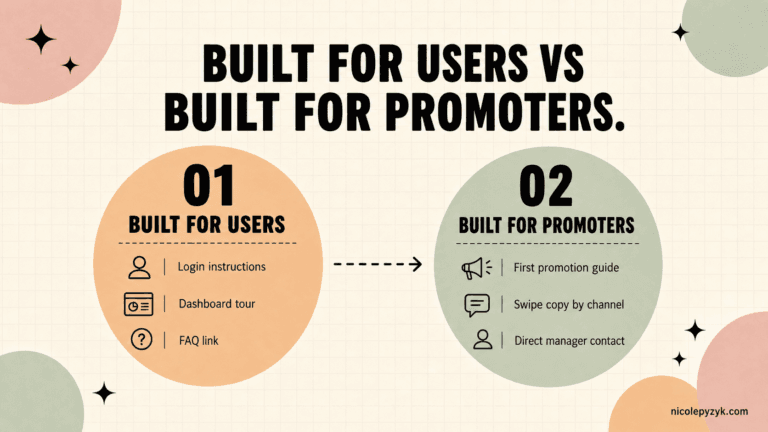
This is where outbound recruitment often loses the advantage it just created. The program did the hard work of finding a genuinely relevant partner, then hands them a login, a logo folder, and silence.
Recruitment worked when you found the right person. The program works when that person actually becomes a partner.
Cold Email Works Best When It Stays Small Enough to Be Specific
I am not against scale. I am against using scale to avoid making choices.
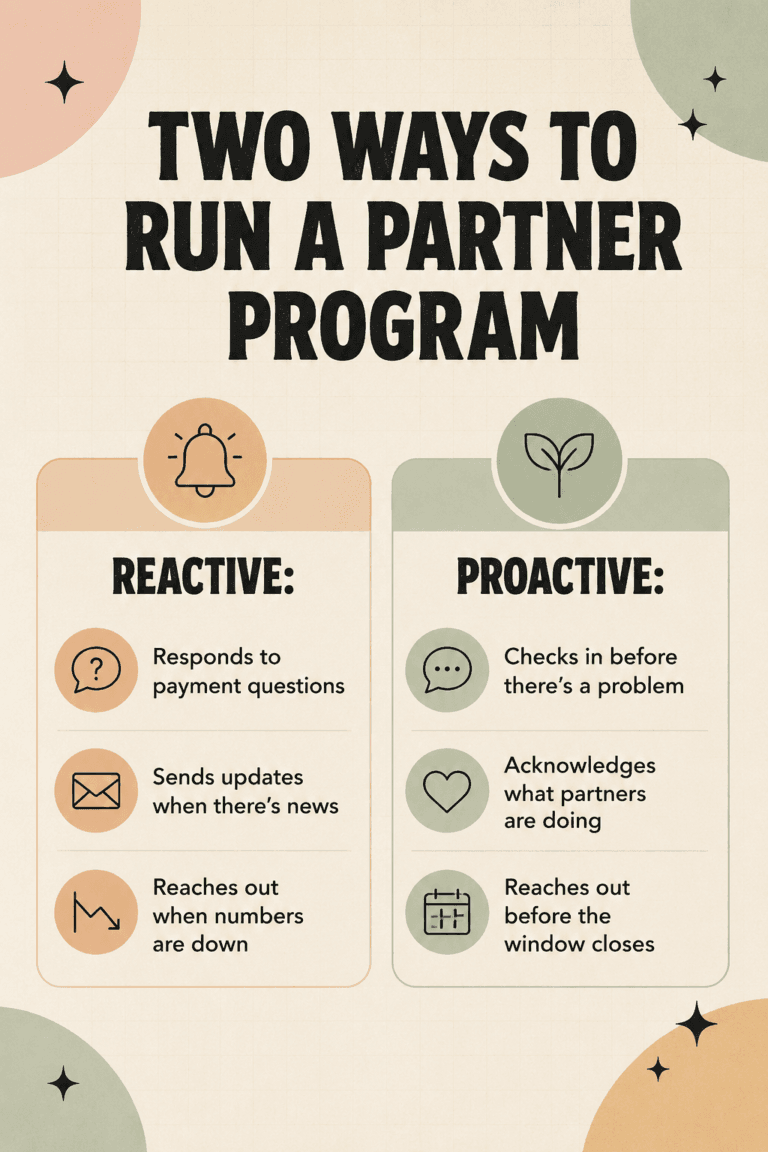
The whole point of proactive affiliate recruitment is that you get to choose who you want to talk to. If the process becomes so automated that the list is basically “everyone with an email address and a marketing-related keyword,” you have recreated passive recruitment with more spam.
Build a list with a reason behind every name. Give the person a reason to care. Make the next step easy. Then judge the outreach by the partners it creates, not the number of emails it sends.