Affiliate Program Management for B2B SaaS: The Complete Operator’s Guide
Affiliate programs get sold as passive income for companies. Build the program, hand out links, watch commissions turn into revenue while you focus elsewhere.
That promise does not survive contact with reality. After a decade in B2B SaaS and years managing affiliate and partner programs directly, I can tell you the channel rewards active ownership and punishes neglect. It behaves less like a vending machine and more like a garden. You plant, you tend, you prune, and the health of the whole thing depends on how consistently you show up.
This guide covers the entire job. My core argument is simple: a B2B SaaS affiliate program is an operating system made up of partner fit, economics, onboarding, activation, relationships, communication, measurement, and ongoing management. Weakness in one part affects all the others. A great commission structure cannot save a program full of poorly matched partners. Great partners cannot save a program where tracking is unreliable or nobody answers their emails.
A B2B SaaS affiliate program is an operating system, not a database of people with links.
If you read to the end, you will understand what the work actually is, how the pieces connect, and where to look first when something underperforms.
1. What B2B SaaS Affiliate Program Management Actually Involves
The job is one part marketing, one part account management, and one part operations. On any given week, a program manager recruits and vets partners, answers partner questions, builds assets, reviews conversion data, checks payouts, investigates suspicious traffic, and makes decisions about commission structures and attribution.
The common misconception is that the platform does the work. The platform tracks clicks and pays commissions. A human decides who gets into the program, why a partner went quiet, whether the economics still make sense, and whether the revenue showing up in the dashboard is genuinely incremental.
Affiliate programs also connect to everything else in the business. Partner-referred customers go through your onboarding, use your product, contact your support team, and churn or renew like any other customer. Treating the affiliate channel as an isolated acquisition tactic ignores how acquisition, product experience, retention, and partner relationships affect one another. My background runs across sales, support, migrations, and customer success before partnerships, and that lifecycle view shapes everything in this guide.
2. How B2B SaaS Affiliate Programs Differ From E-commerce Models
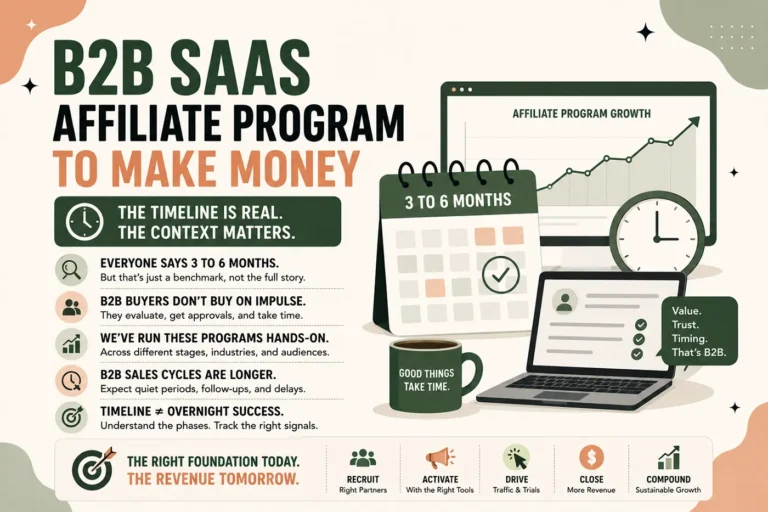
Almost all generic affiliate advice assumes a customer who can decide to buy in a single session. Your buyer researches for weeks or months, involves multiple stakeholders, and rarely converts on first contact.
That difference changes the whole design of the program.
Attribution has to fit the sales cycle. A short cookie window that works fine for an impulse purchase will fail to credit a partner whose referral takes two months to close. The median cookie window for B2B SaaS programs sits around 60 days, and many programs go longer. The right number for you depends on your own time to purchase, which you can measure instead of guessing.
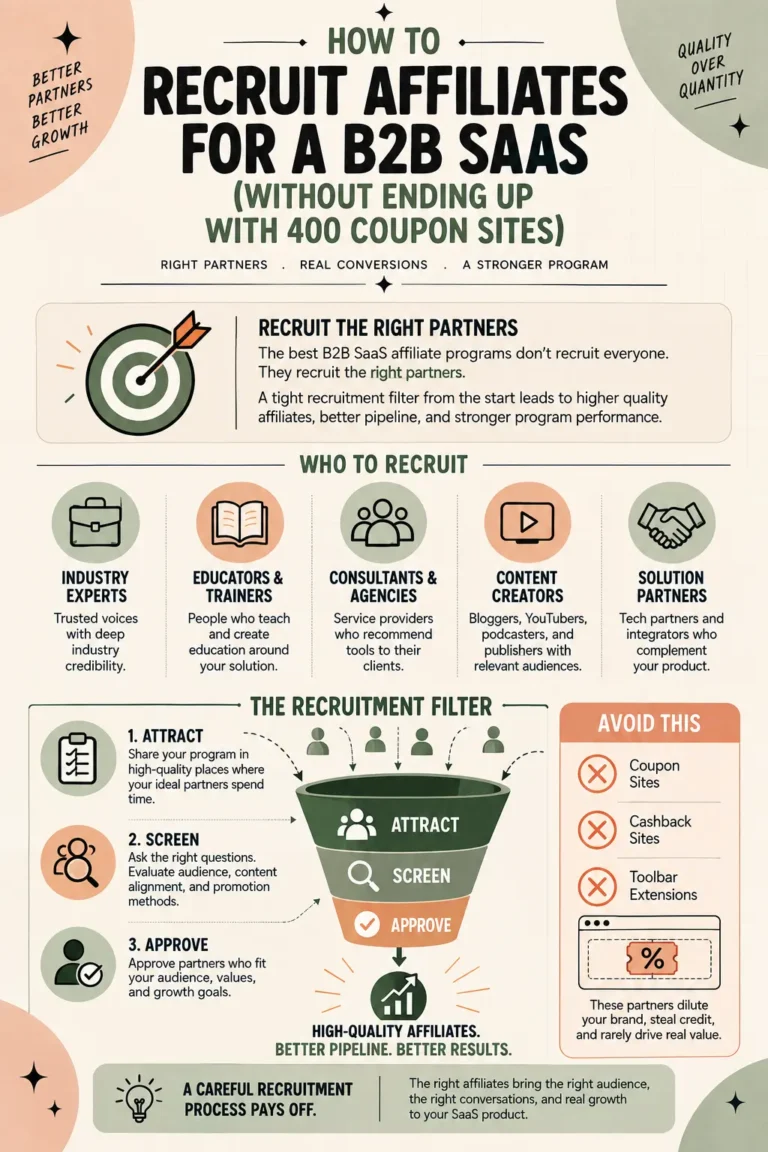
The partner profile is different. Coupon sites and cashback apps are built around consumer-style purchase behavior. They often have little to offer a buying process that involves evaluation, procurement, and committee approval. The partners who perform in B2B SaaS look more like collaborators: consultants who recommend your tool to clients, newsletter authors with professional audiences, agencies that build your product into their service delivery, complementary SaaS companies, and content creators writing comparison articles for buyers already in research mode.
The economics run on subscriptions. A referred customer pays you every month, which opens the door to recurring commissions and raises questions about churn, clawbacks, and long-term incentive alignment that a one-time retail sale never raises.
Because the partners are people with businesses of their own, the management style has to change too. You are maintaining commercial relationships, and that requires useful communication and economics that work for both sides.
3. Program Economics: Commissions, Attribution, and Incentives
The first question founders ask is what commission rate to offer. It matters less than the structure around it. Industry data puts the median B2B SaaS commission at around 20%, often paid recurring for a defined period. Treat that as context, since the right answer depends on your margins, churn, customer lifetime value, and who your partners are.
Think through four things before you set anything.
Sales cycle and payout timing. If your average deal takes months to close, partners may wait a long time before seeing their first payout. Your attribution window and payout rules need to account for that delay. Recurring commissions can make the economics more attractive once a customer converts, but they are not automatically the right answer.
Product stickiness. Recurring commissions make sense when customers stay. If early churn is high, you end up paying commissions on customers who deliver little value. Hold periods and clawback clauses exist for exactly this reason. A proportional clawback, where a partner keeps commission for the months a customer actually stayed, can feel fairer than reversing everything.
Unit economics per referred customer. The question worth asking is plain: what do we actually get back after this payout, once churn and support costs are included? A generous headline rate on customers who churn in month two is worse for everyone than a moderate rate on customers who stay for years.
Partner type. Content creators who introduce buyers at the top of the funnel may value recurring income tied to evergreen content. Consultants who influence the final decision sometimes prefer larger one-time payments or custom terms. One flat structure rarely fits every partner you want, which is why custom commission flexibility matters in your tooling.
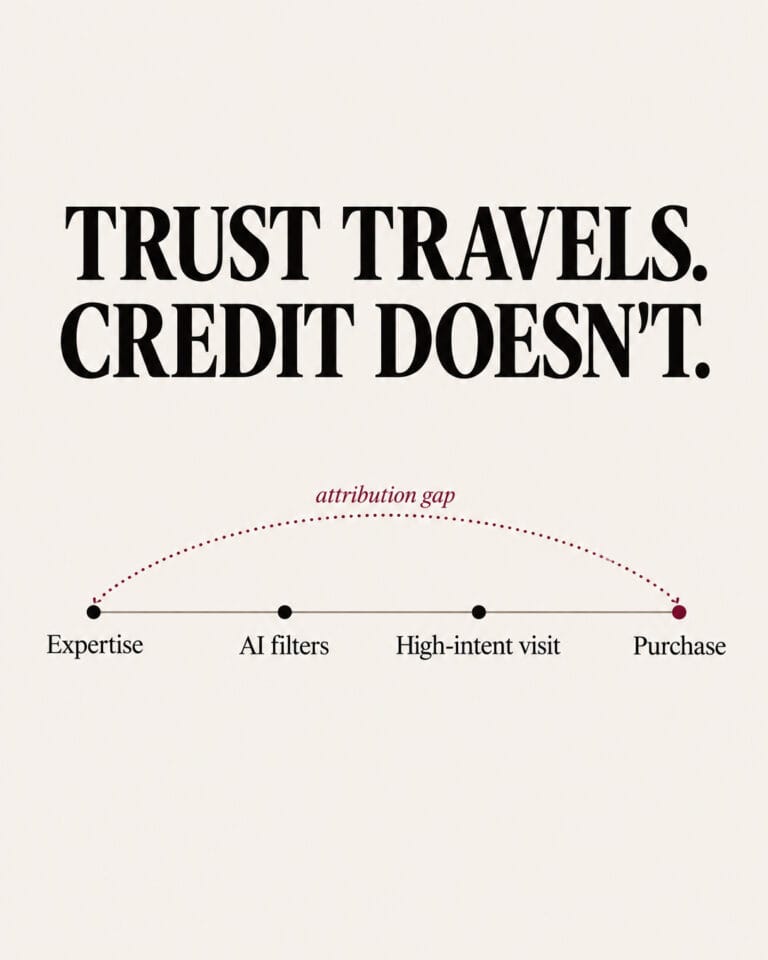
Attribution deserves the same care. Set your window based on your measured time from first touch to purchase, review it when your sales motion changes, and accept that last-click credit will sometimes reward the wrong partner. Running first-touch and last-touch reports side by side tells you where credit is flowing and where it probably should be flowing. You do not need a perfect model. You need one you understand and can defend to partners.
4. Recruiting and Vetting Partners
More affiliates rarely fix a weak program. A program with a few hundred well-matched active partners can outperform one with thousands of signups who never promote anything, and the smaller program is far easier to manage honestly.
Industry data backs the quality argument. The top decile of affiliates captures around 71% of program revenue in typical programs. Your job in recruitment is to find more people who could become meaningful contributors, which means being selective at the door.
When I evaluate a potential partner, I look at a handful of things:
- Audience fit. Their readers, clients, or followers match your ideal customer profile.
- Depth of promotion. They create substantive content or make recommendations inside real professional relationships, rather than dropping bare links.
- Evidence of trust. Their audience actually acts on their recommendations.
- Likelihood to activate. They show genuine intent, ask real questions, or already write about your category.
Treat criteria like these as a diagnostic lens, as something that sharpens your judgment about fit. A rigid point system applied mechanically will reject good partners and accept bad ones.
I go deeper into sourcing and vetting in how to recruit B2B SaaS affiliates without filling the program with low-fit partners.
Where to look: your own customer base is often one of the strongest and most overlooked sources. Power users already understand the product and have credibility with peers. Public reviewers of your product are warm candidates. People already ranking for comparison keywords in your category are already doing the work. Partner marketplaces can accelerate discovery, though the best relationships still start with personal, specific outreach that references something the person actually made.
Be especially cautious with applicants whose model is primarily last-click coupon or cashback traffic. In many B2B SaaS programs, that traffic has low incrementality and can claim commission for demand that already existed.
5. Onboarding and Activation
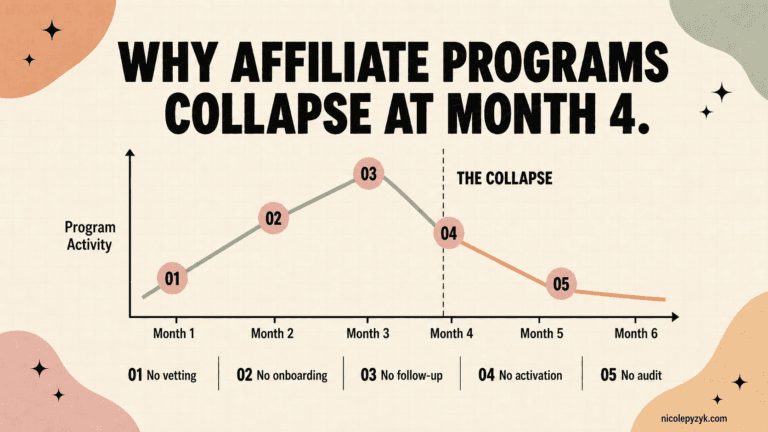
This is where many programs quietly fail. Platform data from Rewardful shows that only 7.6% of affiliates ever generate a single referral. Most registered affiliates never reach that first measurable result.
In my experience the cause is rarely laziness. The cause is friction. A new partner logs into a dashboard full of unfamiliar metrics, cannot find their link or any usable copy, has no obvious first step, and closes the tab. Three weeks later they have forgotten they joined.
The principle behind good onboarding is reducing decision friction. A welcome flow with no direction feels like walking into a shop with no staff and no signage. A welcome flow with everything at once feels like opening a flat-pack furniture box with a million unlabeled pieces and no instructions. Both lose the partner.
What works instead:
- One clear first action. The tracking link up front and one specific, low-effort thing the partner can do with it soon after joining.
- Commission terms in plain language. One sentence a partner can repeat from memory, backed by the payment schedule and method.
- Assets written for their audience. People hearing about your product through someone they trust need different framing than visitors to your homepage. Swipe copy, templates, and concrete commission math all lower the effort of that first promotion.
- A human contact. A named person and a personal check-in when it is useful. A simple “did everything come through okay, any questions about tracking?” message can reveal friction an automated nurture track will never see.
- Personal follow-up if nothing happens. Partners who never take a first action after joining often need a direct message with a specific hook built for them rather than another generic reminder.
Early activity matters because momentum compounds. A partner who promotes once and earns something has a concrete reason to promote again. I cover the full process in my affiliate onboarding sequence guide, and the broader diagnosis in my guide to affiliate activation. If you want the implementation version, The Affiliate Activation Sequence is the AI prompt pack I use to turn program-specific inputs into a customized onboarding and follow-up sequence.
6. Managing Active Partners
Active management is an account management discipline that happens to run through software. If nobody can remember the last useful conversation with a meaningful partner, the program is probably coasting on inertia, and inertia runs out.
I break that day-to-day relationship work down separately in my guide to affiliate relationship management after onboarding.
Management attention should follow value and potential rather than being spread evenly. Your highest-value partners deserve individual relationships: proactive outreach when there is something useful to discuss, early access to new features, co-marketing opportunities, and custom terms where justified. These relationships are the program’s core asset, and treating those partners as collaborators rather than traffic sources shows up directly in how proactively they promote.
Partners with some activity are served well by useful broadcast communication, good assets, and responsive support, with an easy path to more attention as they grow. Partners with no activity over a long period need either a reactivation attempt or a removal decision, which I cover in section 10.
Two things keep this sustainable. First, document your relationships and processes so the program survives personnel changes. One of the more common ways a program dies is organizational: the person who owned it leaves, nobody inherits the role explicitly, partners stop hearing from anyone, applications sit unapproved, and within months the active base has collapsed. Runbooks and a named owner prevent that.
Second, review your data on a regular rhythm. Conversion rates by partner, payouts, and anomalies deserve regular eyes. Problems you catch early, like a tracking break or a sudden traffic spike from one partner, are cheap to fix. Problems you catch late erode partner trust.
7. Partner Communication, Campaigns, and Enablement
My rule for partner communication: useful beats frequent. Partners promote multiple programs, and they remember the ones that make their work easier.
When you send a program-wide update, give partners something they can act on: upcoming promotion dates with real deadlines, new or updated assets, product changes that affect how they should talk about you, one practical tip, and a short human note. Keep it tight. Partners have a financial reason to read your emails, and they will, as long as the content earns the open.
For the practical version, I have a separate guide to affiliate newsletters partners actually use.
For your highest-value partners, broadcast email is not enough. Individual conversations when there is something useful to discuss, what is working, what has changed, what they need, turn a transactional relationship into a collaborative one.
Enablement goes beyond banners. The strongest assets I have built came from co-creating with the partners themselves. Ask two or three of your best partners what their audience needs to understand, what objections come up, and what format fits their channel. The output helps every other partner in the program.
Campaigns work when they ask for a specific behavior in a specific window, with an incentive that your unit economics can support. A time-limited bonus for a first sale, a seasonal push tied to a product launch, a content collaboration around a new integration. Structured campaign incentives, sized against what a referred customer is actually worth to you, outperform vague “promote more” encouragement.
Transparency runs through all of it. Partners perform better when they understand what you value, what is changing, and what they can do to improve. Going silent is the fastest way to lose a partner who was otherwise happy.
8. Measuring Program Performance and Health
Topline affiliate revenue tells you less than it appears to. A rising revenue number can hide concentration risk, weak activation, fraud leakage, and traffic that would have converted anyway. Program health lives underneath the headline figure, and it cannot be reduced to a single universal benchmark, because a healthy number for a high-touch enterprise program looks nothing like a healthy number for a self-serve tool.
The questions I ask of any program:
If you need those questions turned into a repeatable partner-level system, I use an affiliate partner scorecard to decide where management attention should go instead of ranking partners by revenue alone.
- Who is actually active? Measure revenue and performance against partners who have converted recently, since total signup count tells you database size and nothing more.
- What share of partners ever activate? Trend this over time. A declining activation trend points at onboarding or recruitment quality long before revenue reflects it.
- Where is revenue concentrated? Heavy dependence on a handful of partners is a risk you manage by deepening those relationships while developing the next tier.
- How do referred customers behave? Compare churn and retention of partner-referred customers against your baseline. Partners who send customers that leave quickly are sending poor-fit traffic, no matter how the acquisition numbers look.
- Is the revenue incremental? Look for overlap with existing trials, branded search, coupon activity, and other channels. Where volume justifies it, controlled holdouts or future changes to eligibility can help test how much demand the channel actually creates, with partner terms updated appropriately.
Your own trend lines matter more than anyone else’s benchmarks. Compare your program to its own history, investigate changes in direction, and treat external figures as context for sizing expectations rather than targets to hit.
9. Diagnosing Why a Program Is Underperforming
When a program disappoints, the instinct is usually to recruit more partners. Diagnose the structure first. If current partners are not activating, new partners will enter the same broken system and stall in the same places.
Work through the operating system in order:
Partner fit. Look at who is actually in the program. Large volumes of poorly matched partners explain low conversion better than any tactic will fix it.
Economics. Check whether the commission structure gives your partner types a real reason to keep promoting, and whether your attribution window covers your actual sales cycle. A window shorter than your time to purchase means you are failing to credit conversions that are happening, and partners conclude the program does not work.
Onboarding. If plenty of partners join and very few ever take a first action, the problem sits in your first weeks of experience, as covered in section 5.
Assets and enablement. If partners are active but their content converts poorly, your materials probably speak to the wrong audience or the product story is unclear through a third party’s voice.
Relationships. If formerly productive partners drift away, check how long it has been since anyone at your company talked to them.
Data integrity. If the numbers themselves look strange, verify tracking before concluding anything about partners. Broken tracking destroys partner trust faster than almost any other failure, because it hits their income directly.
Each failure mode has a distinct fix, and treating them all as one vague “the program isn’t working” problem leads to remediation that addresses the wrong layer. I walk through a full structured diagnosis in my affiliate program audit guide, and I recommend running one before any major recruitment or reactivation push.
10. Reactivating Dormant Partners and Cleaning the Base
Every program accumulates dormant partners, including well-run ones. Reactivation can beat recruiting replacements because dormant partners already know your product and already said yes once, but only when the underlying structure is sound and the partner was a real fit to begin with.
Before sending anything, segment by intent. Some partners genuinely meant to promote and got interrupted by client work, a technical snag, or an unclear next step. Behavior signals reveal them: they logged in, clicked onboarding emails, maybe generated some clicks before going quiet. These partners are better reactivation candidates. Other partners signed up out of mild curiosity with no real intent, and no sequence will change that.
Reactivation outreach works when it is personal, short, and carries a concrete hook. For a consultant, that hook might be a new use case or integration relevant to their current clients. For a newsletter author, it might be a fresh angle or data they have not written about. Generic “we miss you” campaigns borrowed from e-commerce playbooks rarely move B2B partners because dormancy often reflects competing priorities rather than lost interest.
Then clean up. Partners who have done nothing over a long period and ignored multiple personal attempts should leave the program. Carrying hundreds of permanently inactive names inflates your partner count, distorts every metric that uses it as a denominator, damages email deliverability, and creates a false picture of scale. A clean base of genuinely active partners is more valuable and more honest in every practical sense. I break down a real example in the case study where we cut nearly 90% of a partner list and the program improved.
11. Operational Infrastructure and Affiliate Platforms
You need a tracking platform well before spreadsheets become painful, and the market offers plenty of options at every stage. Rather than comparing vendors, whose features and pricing change constantly, evaluate any platform against what the job actually requires:
- Tracking model. How conversions are attributed, how resilient tracking is to browser privacy restrictions and ad blockers, and whether you can trust the numbers enough to pay money against them.
- Subscription billing support. Native integration with your billing system, so recurring commissions, upgrades, downgrades, and cancellations flow through correctly without manual reconciliation.
- Payout handling. Payment methods your partners can actually use, hold periods, clawback support, and tax documentation.
- Commission flexibility. Custom rates per partner, tiers, bonuses, and hybrid deals. Your best partners will eventually warrant custom terms, and a platform that cannot express them becomes a ceiling.
- Fraud controls. Self-referral detection, suspicious traffic flagging, and the ability to hold commissions pending review.
- Reporting. Per-partner conversion data, cohort views, and exports good enough to answer the health questions from section 8. Weak reporting forces you to manage blind.
- Partner discovery. Some platforms include partner marketplaces and some leave recruitment entirely to you. Know which commitment you are signing up for, because self-directed recruitment is a meaningful ongoing workload.
- Integrations and operational burden. Setup effort, maintenance, and how much manual work remains after everything is connected.
Match the platform to your stage. Early programs validating whether the channel works at all need simplicity and clean billing integration. Larger programs need deeper reporting, flexible commissions, and stronger fraud tooling. Migrating platforms later is work, but choosing an enterprise tool before you have the team and volume to use it wastes money every month.
12. Fraud, Compliance, and Program Integrity
Program integrity protects both your margins and your honest partners. Fraud rarely announces itself neatly, which is why suspicious patterns need to be part of normal program review.
The issues worth watching in B2B SaaS:
- Self-referrals, where a partner signs up as their own customer to collect commission.
- Coupon code leakage, where a code intended for one partner’s audience spreads across coupon directories and claims credit for sales that were closing anyway.
- Brand keyword bidding, where a partner runs paid search ads on your brand name to intercept buyers already looking for you.
- Suspicious traffic patterns, such as sudden conversion spikes without matching engagement, repeated device fingerprints, or data-center IP addresses. These are signals to investigate, not proof of fraud on their own.
Practical defenses: review anomalies as part of your regular data rhythm, search your own promo codes and brand terms periodically, use hold periods so commissions pay out after the refund risk passes, and write your rules into the partner agreement so enforcement is predictable rather than personal.
On the compliance side, disclosure requirements apply to your partners and to you. In the US, the FTC requires clear and conspicuous disclosure of the commercial relationship, placed where the audience will actually notice it. Put the requirement in your agreement, spot-check partner content periodically, and use a graduated enforcement process. Handled with transparency, integrity work strengthens partner relationships because honest partners benefit directly when bad actors stop diluting the pool.
13. When a Company Needs Dedicated Affiliate Program Management
Early on, a founder or generalist marketer can run the program alongside other work, especially while you are still validating whether partners will convert for your product at all. The risk in that phase is deprioritization, because affiliate work is rarely urgent and relationship neglect compounds quietly.
Signals that the program has outgrown side-of-desk management:
- Enough active partners that individual relationship work, asset creation, and data review no longer fit in spare hours.
- Affiliate revenue contributing a meaningful share of total revenue, enough that any other channel at that level would have a dedicated owner.
- Nobody at the company can remember the last substantive conversation with a meaningful partner. This is a clear operational signal regardless of program size.
Your options at that point are a dedicated in-house hire, a specialist consultant working a defined number of hours per month, or an outsourced management agency. In-house makes sense when the channel is central to your growth strategy and you want the relationships owned internally. Consultants fit programs that need specialist depth, like an audit, an economics redesign, or an activation overhaul, without a full-time salary. Agencies can move quickly at launch, with the trade-off that attention is shared across clients and the relationships they build do not automatically transfer when you bring the program in-house. Plan for that transition from the start if you go the agency route.
Whoever you choose, ask about hands-on program management experience from inside companies, ask for specific before-and-after outcomes, and ask whether they earn referral fees from the platforms they recommend. A consultant with a financial stake in your tooling decision carries a conflict of interest worth knowing about.
14. What the Work Looks Like Week to Week
The exact cadence varies by program size, but the shape of the work is consistent.
Weekly: review performance data for anomalies, respond to partner questions, approve or decline applications against your fit criteria, check on recently joined partners, and move at least one meaningful partner relationship forward with a real conversation or a useful asset.
Monthly: review payouts, activation trends for recent cohorts, asset usage, and whether there is anything genuinely useful worth broadcasting to partners. The point is not to satisfy a newsletter calendar. It is to keep the program informed and operational without manufacturing communication for its own sake.
Quarterly: step back and audit the system. Review commission economics against churn and customer value, check attribution against your current sales cycle, compare referred-customer retention to baseline, assess revenue concentration, run reactivation outreach for recently dormant partners, remove the permanently inactive, and spot-check compliance.
The weekly work keeps relationships alive. The monthly work keeps the data honest. The quarterly work keeps the structure sound. Skip any layer long enough and the others degrade with it.
The Whole System, in One Paragraph
Recruit partners who genuinely fit your buyer. Build economics that work for both sides and attribution that matches how your customers actually buy. Remove friction from the first weeks so partners can take a first action. Maintain real relationships with the partners who matter. Communicate things worth reading. Measure what is underneath the revenue number. Diagnose structure before throwing recruitment or incentives at a problem. Keep the base clean, the tracking trustworthy, and the ownership explicit.
Every one of these parts affects the others, which is why quick fixes aimed at a single part so often disappoint. If your program is underperforming right now, start with the diagnostic in section 9 and work through the layers in order. The structural answer is usually sitting in one of them, waiting for someone to actually look.