

Your Affiliate Program Will Collapse at Month 4 (Unless You Read This)
Your affiliate program launched perfectly.
Affiliates signed up. Sales came in. You felt that momentum building.
Then month four hit. Everything stopped.
Sound familiar?
Here’s what you need to know: If your affiliate program is failing after 3 months, the problem isn’t your affiliates. It’s your program’s foundation.
I’ve managed affiliate programs for five years. I’ve seen this pattern repeat dozens of times. The month-four collapse isn’t random. It’s predictable.
And it’s always caused by the same five structural mistakes.
Let me show you what’s actually broken and how to fix it before you lose every affiliate you recruited.
“Programs don’t die because affiliates are lazy. They die because managers build for launch day instead of day 120.”
Why Month 4 Is When Everything Falls Apart
Most articles talk vaguely about “the first six months.”
That’s not helpful.
When you’ve managed programs from the inside, you see something more specific: Month four is when the honeymoon ends.
Here’s the pattern:
Month 1: Affiliates join excited. They test your product. Some promote immediately.
Month 2: Early adopters see their first commissions. Or they don’t. The ones who earned money stay engaged. The rest start drifting away.
Month 3: Affiliates who haven’t earned yet question whether you’re worth their time. Your communication has probably slipped. The excitement is gone.
Month 4: Affiliates make their final decision. They’re either committed or mentally checked out.
The structural mistakes you made at launch? They’ve had 90+ days to compound.
By month four, the damage is done.
The 5 Structural Mistakes Killing Your Affiliate Program
When I moved from customer support into partnership management, I inherited a dying program.
Affiliates were leaving in waves. Or not even bothering to do that. Accounts left open, completely unused. I’m talking thousands.
My first instinct? Send more emails. Offer bigger bonuses. Create flashier banners.
None of it worked.
The problem wasn’t affiliate motivation. It was our foundation. We’d built a house on sand.
Here are the five structural cracks I see in every failing program:
1. Your Commission Structure Doesn’t Match Your Sales Cycle
This kills more programs than anything else.
And it’s invisible until it’s too late.
Here’s what happens:
Your product has a 45-day sales cycle. But you offer one-time commissions.
Affiliates promote once. They wait six weeks for a conversion. By the time they see a payout, they’ve lost interest.
Real example: I worked with a SaaS company offering 20% recurring commissions. Sounds generous, right?
Wrong.
Their average customer churned at month three.
Affiliates did the math: Promote a $50/month product. Earn $10/month. Lose the customer before hitting $30 total.
Not worth it.
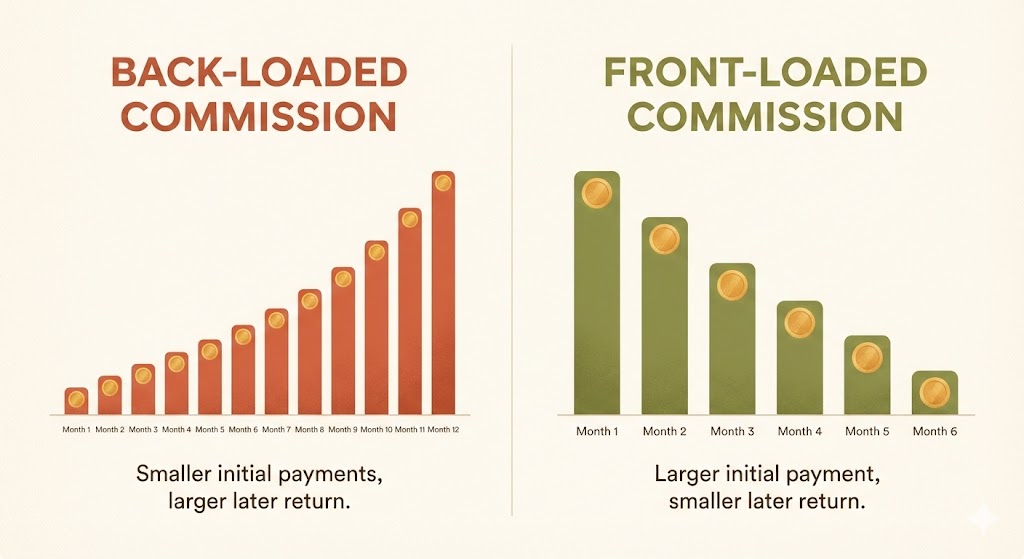
The fix: We restructured to front-load commissions.
- $50 first-sale bonus
- 15% recurring
Affiliate retention doubled.
The Fix Framework:
✅ Long sales cycles need recurring commissions OR milestone bonuses
✅ High-ticket products need higher percentages that feel substantial
✅ Free trial products need commissions tied to conversions, not signups
Action step: Map your commission structure to your actual customer journey. If affiliates wait more than 30 days for their first dollar, you’re bleeding partners.
2. Your Onboarding Creates Confusion (Not Confidence)
Most affiliate onboarding looks like this:
→ Welcome email with login credentials
→ Link to affiliate dashboard
→ Maybe a PDF with “tips”
→ Radio silence
Then managers wonder why new affiliates keep leaving.
Here’s the truth: Affiliates don’t need more information.
They need one clear first action.
“Your onboarding should answer one question: What’s the easiest way for me to make my first commission?”
What NOT to do:
- Send 47 banner ads
- Share your full product catalog
- Overwhelm with options
What DOES work:
- One product
- One promotion angle
- One clear path to their first sale
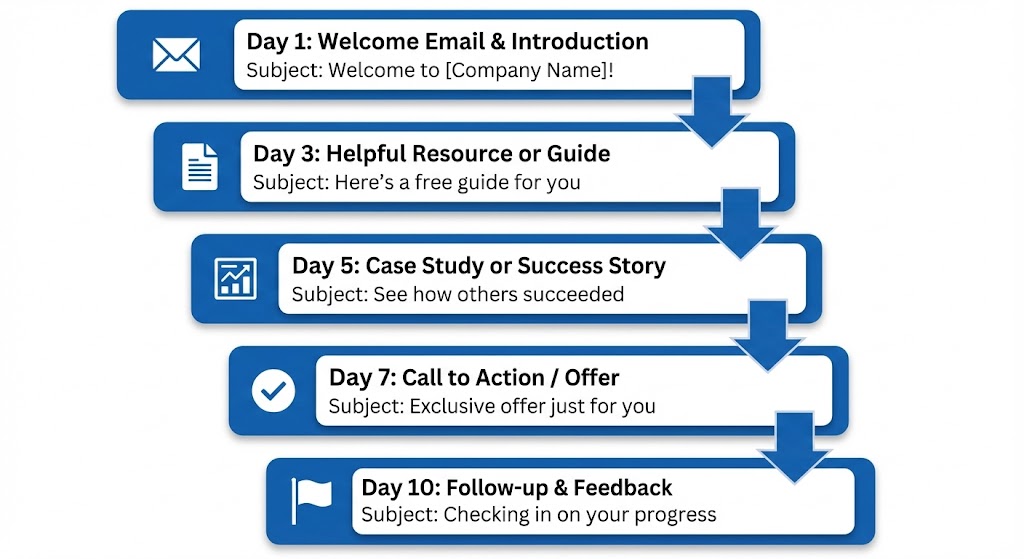
Real example: I restructured onboarding into a “First $100” email sequence.
Five emails over seven days. Each focused on a single action:
📧 Day 1: Your unique link + the ONE product to promote first
📧 Day 3: The exact email template that converts best
📧 Day 5: How to track if it’s working
📧 Day 7: What to do if you haven’t made a sale yet
Result: Activation rates jumped from 12% to 34%.
Your onboarding checklist:
□ Can a new affiliate understand their first action in 60 seconds?
□ Do they know which product to promote first?
□ Have you given them ONE ready-to-use template?
□ Will they hear from you again within 3 days?
If you answered “no” to any of these, your onboarding is failing.
3. Your Communication Disappears After Launch
Launch week, you’re everywhere.
Emails. Slack messages. Personal calls.
Week three? Crickets.
This inconsistency trains affiliates to expect nothing. When they expect nothing, they give nothing.
I learned this the hard way.
After one messy launch, an affiliate replied to my “sorry for going quiet” email with brutal honesty:
“I just assumed the program was dying.”
That hurt. But it taught me everything.
The fix: Build a communication calendar you can actually maintain.
Weekly:
- Quick wins (celebrate every sale)
- Top performer shoutouts
- One promotional tip
Monthly:
- Performance roundup
- New creative assets
- Upcoming opportunities
Quarterly:
- Program updates
- Commission reviews
- Feedback requests
The key word is sustainable.
A weekly newsletter you’ll actually send beats a daily update you’ll abandon by week three.
4. You’re Recruiting the Wrong Affiliates
I see this constantly:
Program managers celebrate hitting 500 affiliates. Then wonder why only 8 produce sales.
Quantity isn’t your problem. Fit is.
When you recruit anyone with a pulse and a website, you get:
❌ Affiliates who signed up for the bonus but have no relevant audience
❌ Affiliates who join every program and promote none
❌ Affiliates whose audience doesn’t match your customer
The uncomfortable truth: I’d rather have 50 affiliates who genuinely reach my target customer than 500 who signed up from a directory listing.
The fix: Define your ideal affiliate profile BEFORE you recruit.
Ask yourself:
- What does my best customer’s trusted source look like?
- Where does my ideal customer go for recommendations?
- What content format converts best for my product?
Then recruit specifically for those profiles.
Example: If you sell project management software to remote teams, your ideal affiliates are:
- Remote work bloggers
- Productivity YouTubers
- SaaS review sites focused on team collaboration
NOT:
- General business bloggers
- Anyone with “entrepreneur” in their bio
- Every affiliate who applies
5. You Have No Feedback Loop
This one’s subtle. But deadly.
Most programs operate as a one-way broadcast:
You send information → Affiliates (hopefully) act on it → You never learn what’s actually working
By month four, you’ve accumulated three months of blind spots.
The fix: Build feedback mechanisms into your structure.
This doesn’t need to be complicated:
Monthly: Quick poll in your newsletter (one question, multiple choice)
Quarterly: 15-minute calls with your top 10 affiliates
Ongoing: Easy way for affiliates to report issues or request assets
“My favorite question to ask affiliates: ‘What’s the one thing that would make promoting us easier?’ The answers are always simple fixes I never would have thought of.”
Real story: One affiliate told me our product comparison chart was missing a competitor that came up in every sales conversation.
Ten minutes to update the chart. Three affiliates closed sales that week because of it.
Would I have known without asking? Never.
How to Fix Affiliate Program Momentum Decline (Before It’s Too Late)
If you’re at month three, you still have time.
If you’re at month five, you can recover. It just takes more effort.
Here’s your repair plan:
Step 1: Audit Your Foundation First
Before you send another “we miss you” email, diagnose the real problem.
Your 5-minute audit:
✓ Does your commission structure match your sales cycle?
✓ Can a new affiliate make their first sale within 7 days of joining?
✓ Have you communicated consistently for the past 30 days?
✓ Do your active affiliates match your ideal customer’s trusted sources?
✓ Do you know your affiliates’ biggest frustration?
If you answered “no” to ANY of these, fix the structure before trying to re-engage.
Step 2: Segment Before You Reactivate
Not all inactive affiliates are worth saving.
Segment them:
Never activated: Onboarding probably failed them. Try a fresh “First $100” sequence.
Activated then stopped: Something broke their momentum. Ask them directly what happened.
Produced sales then stopped: These are your highest-value recovery targets. Personal outreach only.
Generic “come back!” emails waste everyone’s time.
Step 3: Create a 90-Day Structural Review Cycle
Programs that survive past month four build in regular check-ins.
Every 90 days, ask:
📊 What’s our affiliate activation rate? (Target: 25%+)
📊 What’s our affiliate retention rate? (Target: 60%+ active after 90 days)
📊 What’s our average time to first sale? (Target: Under 30 days)
📊 What feedback have we received that we haven’t acted on?
These metrics tell you if your structure is working long before revenue numbers do.
Building It Right From Day One (Early Stage Failure Prevention)
If you’re launching a new program, you have an advantage:
You can build the structure correctly from the start.
Here’s my framework after learning these lessons the hard way:
Pre-Launch (Weeks -4 to 0)
□ Define your ideal affiliate profile with specific criteria
□ Map your commission structure to your actual sales cycle
□ Create your onboarding sequence focused on first-sale velocity
□ Build your sustainable communication calendar
□ Set up your feedback mechanisms
Launch (Weeks 1-4)
□ Recruit 20-30 highly-qualified affiliates (quality over quantity)
□ Provide high-touch onboarding with personal check-ins
□ Communicate at least twice weekly
□ Celebrate every win publicly
□ Collect feedback aggressively
Stabilization (Weeks 5-12)
□ Transition to sustainable communication rhythm
□ Expand recruitment based on what’s working
□ Implement feedback from early affiliates
□ Monitor activation and retention metrics weekly
□ Adjust commission structure if time-to-first-sale is too long
Month 4 and Beyond
□ Conduct first structural review
□ Segment affiliates by performance tier
□ Create tier-specific communication tracks
□ Begin testing new recruitment channels
□ Document what’s working for future scaling
The Real Reason Programs Die at Month 4
Let me tell you something I’ve learned after years in this space (including plenty of failures of my own).
Programs don’t die because affiliates are lazy or disloyal.
They die because managers build for launch day instead of day 120.
The excitement of recruitment feels like progress. But it’s not the same as building something sustainable.
My standard poodle Barbie taught me this lesson, actually.
When we first got her, I was obsessed with teaching impressive tricks. Shake. Roll over. Play dead.
She learned them all in the first month.
But I’d skipped the boring stuff. Loose leash walking. Reliable recall. Staying calm when guests arrived.
By month four, I had a dog who could high-five but pulled my arm out of its socket on every walk.
I had to go back and rebuild the foundation.
It took three times as long as doing it right the first time would have.
Your affiliate program is the same.
The flashy stuff means nothing without the structural foundation to support it:
❌ Big commission rates
❌ Beautiful creative assets
❌ Aggressive recruitment
None of it matters if your foundation is cracked.
Build the boring stuff first. Your month-four self will thank you.
FAQ: Fixing Failing Affiliate Programs
Don’t Let Month 4 Kill Your Program
You’ve built something valuable here.
You’ve recruited partners. Created assets. Invested time and money.
Don’t let structural mistakes you can still fix destroy all that work.
If you’re at month 2-3 and want a structural audit before the breaking point hits, I run 90-minute program reviews. We identify your specific failure points and build a repair roadmap.
You’ll get:
✓ Diagnosis of your five biggest structural weaknesses
✓ Commission structure analysis matched to your sales cycle
✓ Onboarding flow review and rewrite recommendations
✓ 90-day communication calendar template
✓ Affiliate recruitment profile worksheet
Keep Building Better Programs
Affiliate program management is hard. You’re juggling recruitment, communication, commission structures, and performance tracking—all while trying to grow revenue.
But when you build the foundation right, everything else gets easier.
Want more insights on building affiliate programs that last?
→ AffiliateWP: Everything You Need to Know About Affiliate Onboarding (Guide)
→ Impact: 5 Effective Affiliate Commission Structures: Models, Examples, and Benefits
→ ReferralCandy: How to Recruit High Quality Affiliates: Strategies That Actually Work