
The Day I Realized Something Was Wrong
Three months into remote work, I realized I hadn’t had a real conversation in days.
Not a Zoom meeting where I presented slides. Not a quick Slack exchange about project deadlines. I mean an actual, meandering, human conversation where someone asked how I was doing and waited for a real answer.
I was working from my apartment in Spain, laptop on my desk, the familiar sounds of my neighborhood outside. Yet somehow, despite being surrounded by a city I knew well, I felt more disconnected than ever.
If you’re reading this, you probably know the feeling. Maybe you switched to remote work during the pandemic and never went back. Or perhaps you’re a digital nomad, location-independent contractor, or someone who chose the remote life for its flexibility. Either way, you’ve felt that hollow ache that creeps in around 3 PM when you realize you haven’t spoken out loud all day.
You’re not alone in feeling alone. Research shows that 50% of remote workers experience loneliness at least once a week. Some studies put that number even higher. The truth is, remote work loneliness is real, common, and absolutely fixable.
This article shares 12 strategies that genuinely helped me go from feeling isolated working from home alone to building a fulfilling social life while maintaining my remote career. These aren’t theoretical tips from a management consultant—they’re battle-tested solutions from someone living this reality every day.
- The Day I Realized Something Was Wrong
- Why Remote Work Loneliness Hits Different
- 12 Practical Ways to Combat Remote Work Loneliness
- 1. Work From a Coffee Shop or Coworking Space Once a Week
- 2. Schedule Virtual Coworking Sessions
- 3. Create Non-Work Rituals That Get You Out
- 4. Join Online Communities in Your Field
- 5. Be Intentional About Video Calls
- 6. Establish Boundaries Between Work and Personal Time
- 7. Find Local Meetups or Classes
- 8. Schedule Regular Check-ins With Friends and Family
- 9. Get a Change of Scenery
- 10. Adopt a Pet (or Start With Plants If You're Not Ready)
- 11. Create Collaboration Opportunities at Work
- 12. Consider a Hybrid Schedule If Possible
- What NOT to Do When You're Feeling Lonely
- When Remote Work Loneliness Becomes a Bigger Issue
- My Personal Loneliness-Fighting Routine
- You're Not Failing at Remote Work
Why Remote Work Loneliness Hits Different
Here’s the thing: remote work loneliness isn’t just about being alone.
I actually enjoy having time to myself. I don’t need to be surrounded by people constantly to feel good. But remote work loneliness? That’s different. It’s sneakier and more complex than simply lacking company.
The Missing “Third Spaces”
Sociologists talk about “third spaces”—places that aren’t home (first space) or work (second space) where we naturally encounter other humans. Coffee shops, gyms, libraries, community centers. For most of history, humans bumped into each other in these spaces without trying.
When you work in an office, you at least have that workplace for built-in social interaction. You chat with colleagues about weekend plans. You grab lunch with your team. You have those random water cooler conversations that feel meaningless but actually create connection.
Remote work often eliminates these accidental encounters. Your home becomes both living space AND workspace. There’s no natural reason to leave. No built-in social interactions. You have to manufacture every connection deliberately, which is exhausting.
The Difference Between Solitude and Loneliness
This distinction changed everything for me.
Solitude is chosen. It’s rejuvenating. It’s the quiet Sunday morning with coffee and a book. It’s productive focus time without interruptions. Solitude feels peaceful.
Loneliness is unchosen. It’s that gnawing feeling that no one would notice if you disappeared for a week. It’s wanting connection but not having access to it. Loneliness feels heavy.
I spent weeks thinking something was wrong with me because even as someone who enjoys being around people, I still needed alone time to recharge. Then I realized: both things can be true. I could enjoy focused solo work while also craving meaningful human connection. Recognizing which I was experiencing at any moment helped me respond appropriately.
If you’re feeling energized by alone time—that’s solitude. Embrace it.
If you’re feeling drained, anxious, or invisible—that’s loneliness. Time to try some of these solutions.
12 Practical Ways to Combat Remote Work Loneliness
1. Work From a Coffee Shop or Coworking Space Once a Week
This was my first breakthrough in figuring out how to stay social as a remote worker.
I discovered the power of what psychologists call “parallel play”—that thing toddlers do where they play alongside each other without directly interacting. Adults need this too. Being in the same physical space as other humans, even if you’re not talking to them, satisfies a deep social need.
Every Tuesday, I pack my laptop and head to a coworking space in Málaga. I’ve tried both approaches:
- Coworking membership: Around €150/month for full access. Worth it if you’ll use it multiple times weekly. The consistent community helps you build relationships over time.
- Coffee shop rotation: Free (just buy coffee/lunch). Perfect for budget-conscious remote workers. I have three favorite spots I rotate through.
The magic happens when you become a regular. The barista starts remembering your order. You nod hello to familiar faces. Maybe you chat about the weather with someone waiting for coffee. These micro-interactions matter more than you’d think.
Pro tip: Look for coworking spaces that host community events. Some offer regular social hours where remote workers from different companies can grab drinks together. It’s an easy way to meet people without the pressure of formal networking.
2. Schedule Virtual Coworking Sessions
When leaving your home isn’t practical (bad weather, tight deadline, or you simply don’t feel like it), virtual coworking is your friend.
I use these platforms for remote work loneliness solutions:
- Focusmate: 50-minute sessions with a stranger via webcam. You state your goal at the start, work silently, then share progress at the end. The accountability is powerful.
- Flow Club: Virtual coworking with music, hosted sessions, and a community vibe. More structured than Focusmate.
- Discord communities: Free option. Join productivity servers where people gather to work together via voice or video channels.
The “body doubling” effect is real. Having another human present—even virtually—makes you more focused and less isolated. It’s weird how well it works until you try it.
I also set up a weekly virtual coworking session with two friends from different countries. We hop on Zoom every Wednesday morning, cameras on, work for two hours, and take coffee breaks to chat. It’s become my favorite part of the week.
How to start one with friends: Pick a recurring time, create a shared calendar invite, and establish simple ground rules (cameras on, mics muted while working, 5-minute break every hour to chat).
3. Create Non-Work Rituals That Get You Out
Remote work loneliness often stems from having no reason to leave your house. The solution? Create reasons.
My non-negotiable rituals:
Morning walk: Before I even open my laptop, I walk 20 minutes along the beach with my dog Barbie. The combination of movement, sunlight, and seeing other people (joggers, other dog walkers, elderly couples having coffee) sets my mood for the entire day.
Lunch away from desk: I physically leave my apartment for lunch. Even if it’s just sitting on a park bench with a sandwich, the change of scenery breaks up the isolation of the workday.
Evening physical activity: Three nights a week, I attend aerial arts classes (silks and hoop). This was a game-changer. It’s structured social time with the same group of people, plus the physical challenge gives me something to think about besides work.
The key is consistency. These aren’t “nice to have” activities—they’re infrastructure. They’re as essential to my wellbeing as work itself.
Your version might include: Gym classes, yoga, running clubs, language lessons, dance classes, martial arts, pottery workshops, or any hobby that gets you around other humans regularly.
4. Join Online Communities in Your Field
Professional connection matters too.
I’m in partnerships and business development, so I joined several online communities:
- Slack workspaces: Partnership Leaders, RevGenius, Remote Work Association. These have channels for casual chat, professional questions, and even regional meetups.
- LinkedIn groups: My most active group has 15,000+ partnership professionals who share job postings, advice, and virtual events.
- Discord servers: Industry-specific servers where people hang out casually, not just for formal networking.
These communities help with both professional growth AND social connection. I’ve made genuine friends in these spaces—people I’ve never met in person but chat with regularly about work challenges, career moves, and life in general.
Finding your communities: Search “[your industry] + Slack community” or “[your role] + Discord server.” Many require applications or invitations, but most are welcoming to genuine participants who contribute value.
5. Be Intentional About Video Calls
This seems obvious, but it matters: turn your camera on.
I know, I know. Video fatigue is real. You want to take calls in your pajamas. I get it. But face-to-face interaction—even digital—creates connection that audio-only calls simply don’t.
My team has evolved some helpful practices for feeling less isolated working from home:
- “Water cooler” Slack channel: Random non-work chat. Someone shares a funny meme, another asks for TV recommendations, someone posts a photo of their lunch. It replicates those casual office conversations.
- Virtual coffee chats: Once a month, we’re randomly paired with someone from another department for a 20-minute video call. No agenda. Just getting to know each other.
- Camera on: Our team meeting rule. Everyone shows up on video, and we always spend the first 10 minutes just catching up about our weekends or lives.
Does this solve loneliness completely? No. But it helps you feel part of something larger than yourself and your laptop.
6. Establish Boundaries Between Work and Personal Time
This feels counterintuitive, but creating clear work boundaries actually reduces loneliness.
Here’s why: When work bleeds into all hours, you never protect time for social activities. You tell yourself you’ll meet friends “later” but later never comes because you’re always kind of working.
My shutdown ritual:
- 6:00 PM: Close all work apps and Slack
- Change clothes (physical signal that work is over)
- Take a 10-minute “commute” walk around the block
- Don’t check work email or messages until 9:00 AM next day
Creating this hard boundary means my evenings are truly free for social plans. I can commit to dinner with friends, take that aerial arts class, or video call family without the guilty feeling that I should be working.
Try this: Set a specific work end time and stick to it religiously for two weeks. You’ll be amazed how much space opens up for social connection.
7. Find Local Meetups or Classes
If you’re settled in one place (not constantly traveling), local community becomes crucial.
Ways to connect locally:
- Professional networking events: Industry-specific meetups in your city
- Hobby-based groups: Meetup.com, local Facebook events, community centers. I found my aerial arts studio through local recommendations.
- Special interest communities: Whatever you’re into, there’s probably a local group for it
The beautiful thing about hobby groups: you’re not there explicitly to make friends, so there’s less pressure. You’re there to practice handstands or try rock climbing or learn photography. Friendship emerges naturally through shared activity.
8. Schedule Regular Check-ins With Friends and Family
This saved me: treating personal relationships with the same seriousness as work meetings.
I have recurring calendar invites for:
- Weekly video call with my best friend (different time zone, so we scheduled it like a meeting)
- Monthly extended family Zoom (15 relatives across 3 continents)
- Quarterly in-person visits with friends in other cities (I block the dates months in advance)
Time zones as a remote worker can be brutal. Spain is 6-8 hours ahead of the US East Coast, depending on the season. But rather than letting this kill relationships, getting strategic helps:
- Early morning = catch people on their evening
- Late night = catch people on their lunch break
- Weekend mornings = prime time for calls
Quality over quantity matters here. One deep, 45-minute conversation with a close friend does more for loneliness than five superficial 10-minute check-ins.
9. Get a Change of Scenery
Your environment shapes your emotional state more than you realize.
Even if you’re not constantly traveling, you can create variety:
- Work from different rooms: I rotate between my desk, kitchen table, and outdoor terrace. Sounds simple, but the mental reset helps.
- Different cities: I sometimes take the train to Madrid, Granada, or Barcelona for long weekends where I work mornings and explore afternoons.
- “Workcations”: Stay somewhere new for 1-2 weeks. Airbnb in a different neighborhood, visit family, house-sit for a friend.
Strategic variety—working from 2-3 locations throughout the year—gives just enough change without the chaos of constantly being on the move.
10. Adopt a Pet (or Start With Plants If You’re Not Ready)
This was genuinely one of the most effective solutions for my remote work loneliness.
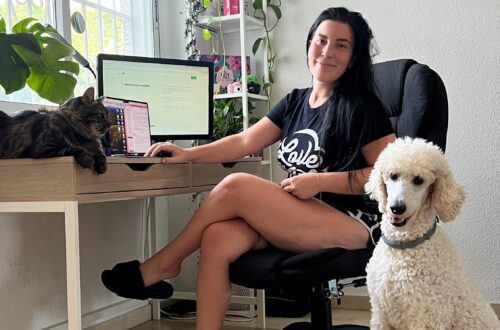
I adopted my standard poodle Barbie specifically because I recognized I needed consistent, living company during my workdays. She’s been transformative. Morning walks aren’t optional anymore—she needs them, which means I get outside daily no matter how much work is piling up. Midday play breaks force me away from my screen. Her presence in the room while I work creates that sense of “not being completely alone” that humans need.
I also have four cats, which adds different energy to the home. They’re more independent than Barbie, but their routines (demanding breakfast, afternoon naps on my desk, evening zoomies) structure my day in ways I didn’t realize I needed.
The research backs this up: Pet owners who work from home report significantly lower loneliness levels than remote workers without pets. There’s something powerful about having a living being that’s genuinely happy to see you, needs your care, and gives unconditional affection.
If you’re not ready for a pet:
- Start with low-maintenance plants (snake plant or pothos)
- Volunteer at a local animal shelter
- Foster animals temporarily
- Care for a friend’s pet occasionally
The key is having something that needs you and responds to your care. It’s a surprisingly effective antidote to feeling invisible.
11. Create Collaboration Opportunities at Work
Don’t just work in isolation—actively seek collaboration.
I started volunteering for cross-functional projects specifically to meet people outside my immediate team. It led to genuine work friendships with people I now regularly chat with beyond project needs.
Other approaches:
- Pair working: Schedule time to work on tasks together with a colleague via video. It’s like pair programming but for any role.
- Lead a lunch-and-learn: Present about your expertise or interesting topic. Creates connection through shared learning.
- Join employee resource groups: Most companies have them. They organize social events and community-building activities.
When I stopped viewing my job as just task completion and started seeing it as relationship building, the loneliness decreased significantly.
12. Consider a Hybrid Schedule If Possible
The data is clear: hybrid work combines the best aspects of remote and office work for many people.
If your company offers an office, even going in once a week can dramatically reduce feelings of isolation. That one day of casual hallway conversations, lunch with colleagues, and after-work drinks might be enough to sustain you through four remote days.
Some fully remote companies organize quarterly in-person gatherings where the whole team comes together for a week. Those intensive bonding sessions can create enough connection to carry people through the remote months.
If hybrid isn’t possible: Suggest your company organize regional meetups for employees in the same area, sponsor attendance at conferences where coworkers will be, or provide stipends for coworking space memberships.
What NOT to Do When You’re Feeling Lonely
Let’s talk about the traps I fell into before finding solutions:
Don’t stay glued to your screen: I used to combat loneliness by diving deeper into work. More meetings! More projects! It doesn’t work. Screen time doesn’t equal human connection.
Don’t confuse social media scrolling with connection: Watching Instagram stories about other people’s lives isn’t social interaction. It often makes loneliness worse by triggering comparison.
Don’t ignore the feeling: I spent months telling myself I was “fine” and should just work harder. Acknowledging loneliness isn’t weakness—it’s self-awareness.
Don’t compare your situation to others: “Other remote workers seem fine, so why am I struggling?” Different people have different social needs. Your feelings are valid regardless of what works for someone else.
When Remote Work Loneliness Becomes a Bigger Issue
Sometimes, loneliness crosses into more serious mental health territory.
Warning signs to watch for:
- Persistent sadness lasting weeks, not just bad days
- Loss of interest in activities you used to enjoy
- Significant changes in sleep or appetite
- Difficulty concentrating that affects work performance
- Physical symptoms (headaches, stomach issues) without clear cause
- Thoughts of self-harm or that life isn’t worth living
If you’re experiencing these, please seek professional support. Remote work loneliness can trigger or worsen depression and anxiety.
Resources available:
- BetterHelp or Talkspace: Online therapy designed for remote lifestyle
- Company EAP programs: Many employers offer free counseling sessions
- Local mental health services: Available in most cities
- Crisis hotlines: Available 24/7 in every country
There’s no shame in needing help. The shame is in suffering silently when solutions exist.
My Personal Loneliness-Fighting Routine
Here’s what a typical day looks like for me now:
Morning (7:00-9:00 AM):
- Wake up, make coffee
- 20-minute beach walk with Barbie (my standard poodle)
- Light breakfast while reading or journaling
- Shower and dress like I’m leaving the house (even if I’m not)
Workday (9:00 AM-6:00 PM):
- Mix of home and coworking space
- Lunch away from desk, usually at a café or park
- Tuesday = Focusmate session for focused work
- Wednesday = virtual coworking with friends
- All team meetings with camera on
Evening (6:00 PM onward):
- “Commute” walk to signal work is over
- Monday/Wednesday/Friday = aerial arts class
- Other evenings = dinner with friends or family, hobby time, or quality alone time (the good kind)
- 10:00 PM = video call with best friend (her lunch break)
Why this works: It’s sustainable. I’m not forcing myself to be around people 24/7. Instead, I’ve created a rhythm that includes both meaningful solitude AND regular connection. Some days I skip the evening social activities because I genuinely need alone time. Other days I add extra hangouts because I’m craving more interaction.
The key is having a default structure so connection happens automatically, not just when I remember to reach out.
You’re Not Failing at Remote Work
If you’re feeling isolated working from home alone, you’re not doing remote work wrong. You’re human.
We evolved as deeply social creatures. For 300,000 years, humans lived in small, tight-knit communities where we saw the same people daily. The remote work revolution is barely 20 years old. Of course, it comes with challenges our brains didn’t evolve to handle.
Remote work loneliness is normal. Common. Fixable.
The solutions in this article aren’t one-size-fits-all. Your version might look completely different from mine. Maybe you need more social time than I do. Maybe you need less. Maybe coworking spaces aren’t your thing but running clubs are. Maybe you’d rather die than do aerial arts but you’d love a book club.
The invitation is to experiment. Try one or two strategies for a couple of weeks. Notice what helps. Adjust. Add something new. Eventually, you’ll build your own routine that balances the freedom and flexibility of remote work with the human connection we all need.
Remote work can be isolating, but it doesn’t have to be lonely.
Now I’m curious: What helps you stay connected while working remotely? What strategies would you add to this list? Drop a comment below—I read and respond to every one, and I’d genuinely love to hear what’s working for you.
Note: This article reflects my personal experience with remote work loneliness and solutions that helped me. Everyone’s situation is different. If you’re struggling with serious mental health issues, please consult a qualified healthcare provider.





2 Comments on “How to Deal with Loneliness Working From Home: 12 Strategies That Actually Helped Me”